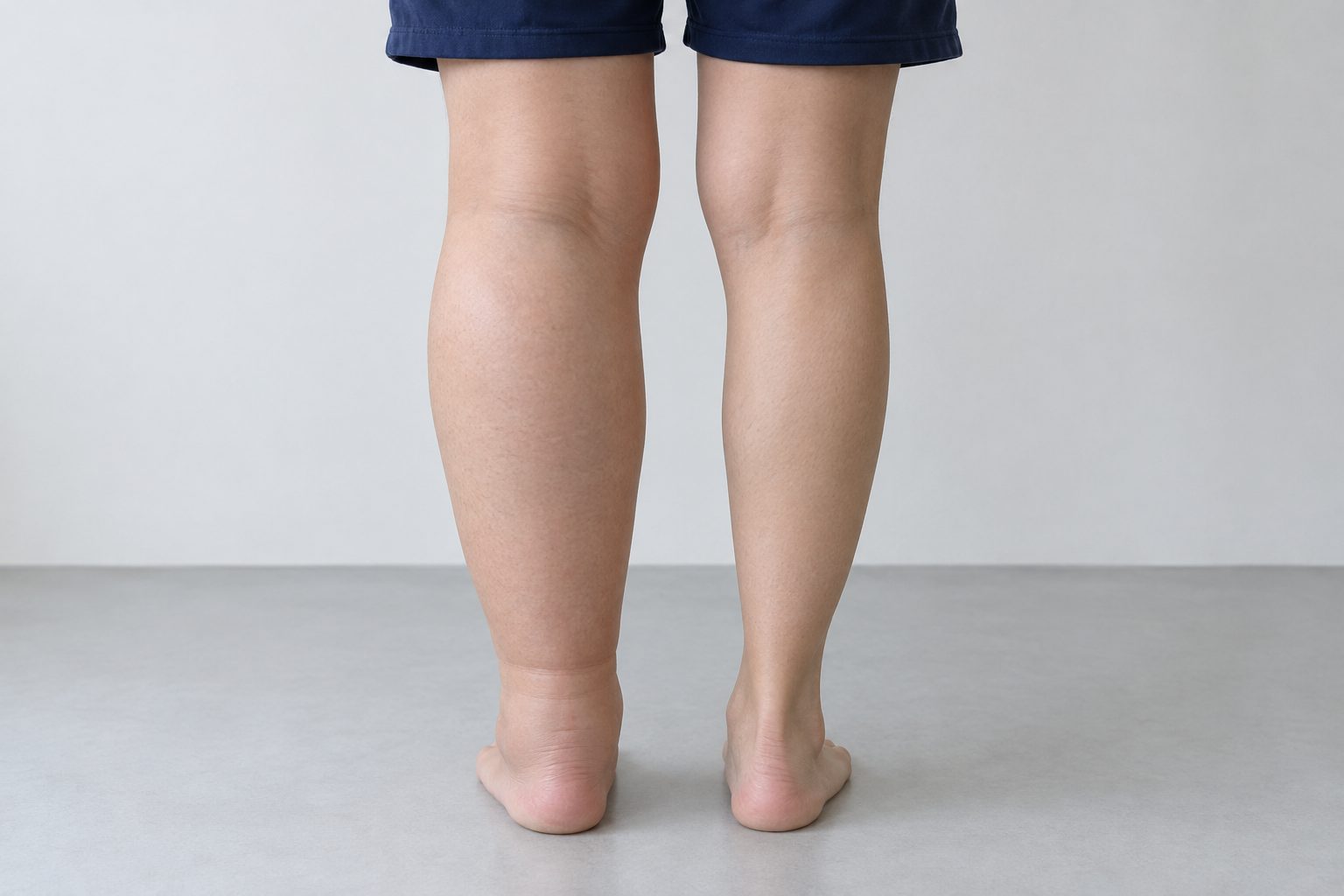
Dr Desmond Ooi, a vascular surgeon, treats deep vein thrombosis and varicose veins, two problems May-Thurner syndrome can cause.
In May-Thurner syndrome, an artery low in the belly presses the main vein from the left leg against the spine.
In most people, this squeeze causes no trouble.
When it does, the left leg can swell, or a clot can form in its deep veins.
What May-Thurner syndrome is, and how iliac vein compression happens
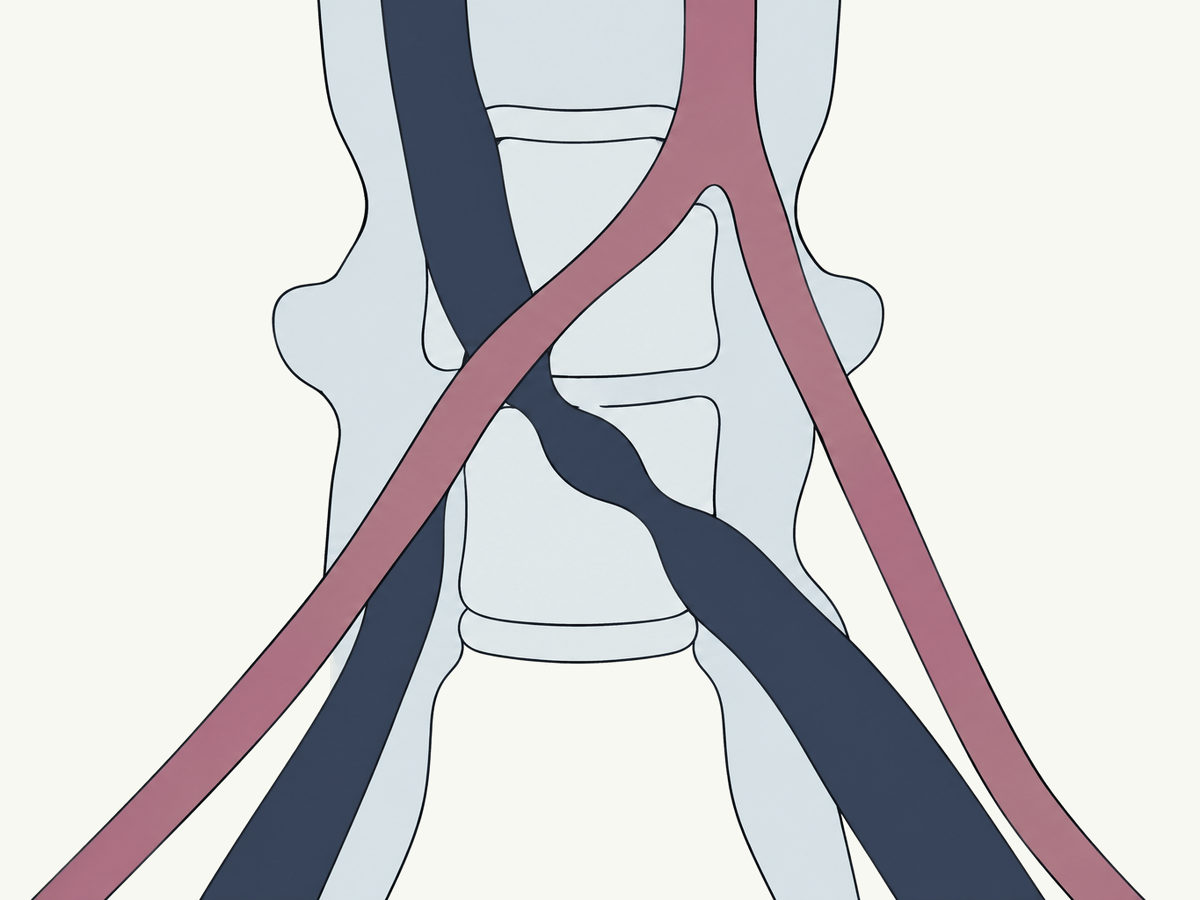
Low in the belly, the main artery divides into two branches, one for each leg.
Just below, the veins from the two legs join to form the main vein back to the heart.
The right branch of the artery crosses in front of the left leg's vein, where that vein lies on the spine.
If the artery presses hard, the vein is squeezed between it and the spine. Over time the vein can scar inside, and blood leaving the leg slows.
Doctors also call it iliac vein compression, or left iliac vein compression.
In some people, the vein from the right leg is the one affected.
May-Thurner syndrome symptoms, and what to look out for
Most people with the squeeze never have symptoms.
When it does cause trouble, the signs are mostly in the leg:
- Swelling: of the left leg, on one side only
- A clot: a deep vein thrombosis high in the leg, in the thigh or the pelvis
- Pain on walking: a leg that aches or hurts as you walk, and eases with rest
- Varicose veins: backflow in the pelvic veins can feed varicose veins in the leg, including veins that come back after treatment
- Pelvic pain: a lasting ache low in the belly, in some people
- After a clot: a leg that aches, feels heavy or tired, itches or cramps
May-Thurner syndrome and a clot in the left leg
A clot in the deep veins of the left thigh or pelvis is one of its most common signs.
A clot is first treated with blood thinners, as for any deep vein thrombosis.
If a clot is cleared from the vein, the squeezed part beneath it may then be held open with a stent.
If your whole leg swells suddenly, or your calf becomes severely painful, see a doctor the same day.
If you also become short of breath or have chest pain, call 995 or go to the nearest A&E now.
How a compressed iliac vein is found
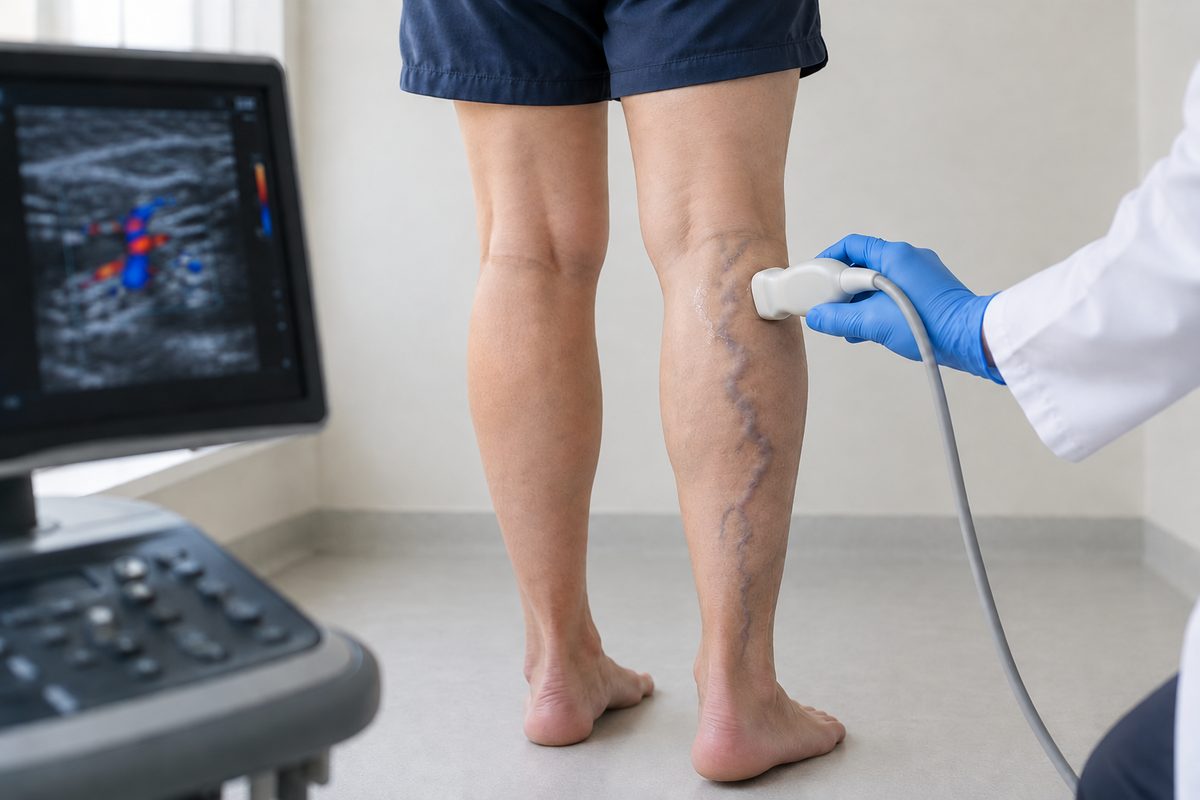
A duplex ultrasound scan shows the veins and the direction the blood is flowing in them, and it can find a clot.
A CT or MRI scan of the veins can show the squeeze itself.
The squeeze is measured most exactly during treatment, with a tiny ultrasound probe passed inside the vein.
A squeeze seen on a scan is not always the cause of symptoms. Many people have one and never know.
May-Thurner treatment, and when none is needed
A squeeze that causes no symptoms is not treated.
The European guideline on vein disease advises against a procedure when the symptoms are not severe.
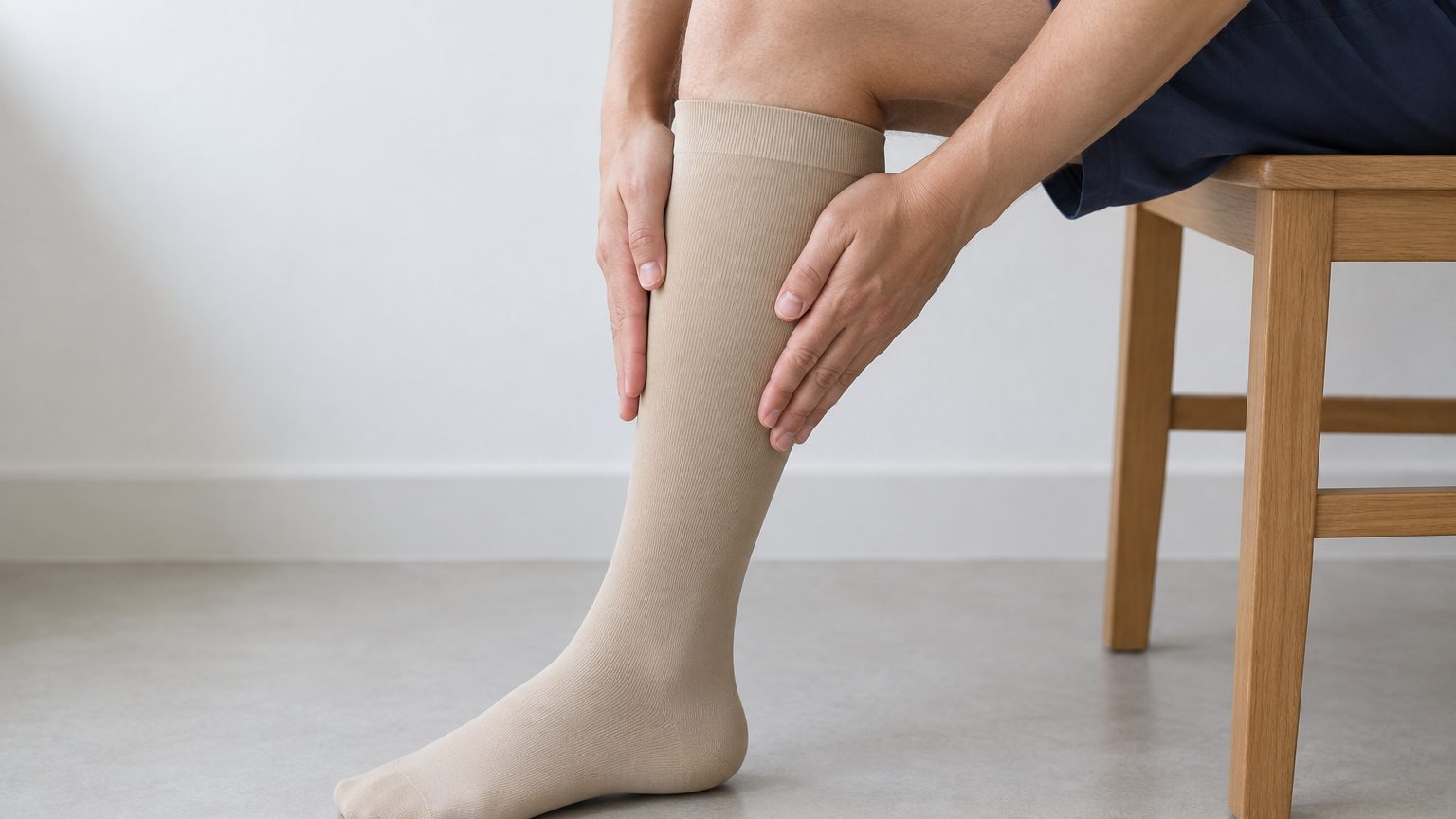
Compression stockings
Compression stockings can ease the aching and swelling while you wear them.
Blood thinners
For a clot, blood thinners come first, as for any deep vein thrombosis.
A stent in the vein
For severe symptoms, the guideline advises treatment from inside the vein first.
A stent, a fine mesh tube, is passed in through a vein in the leg or the neck, and opened where the vein is squeezed.
An ultrasound probe inside the vein guides where it goes, and duplex scans check it afterwards.
How well a stent works, and who decides
Stenting has become the standard treatment for May-Thurner syndrome.
A 2025 analysis of the published studies found that stents placed for a squeeze mostly stayed open, more often when there had been no clot.
Serious complications were uncommon.
Surgery is kept for when treatment from inside the vein is not suitable. The guideline advises that a team of doctors from different fields decides together.
Which of these suits you depends on your symptoms, the scan, your general health and your own choice.
Questions about May-Thurner syndrome
What triggers May-Thurner syndrome?
The squeeze itself comes from where the artery lies over the vein.
It causes trouble when the pressure slows the blood leaving the leg, or scars the inside of the vein.
That can lead to a swollen leg or a clot.
What are compressed veins and how do they occur?
A compressed vein is pressed narrow by something beside it.
In the pelvis, that can be the crossing artery of May-Thurner syndrome, endometriosis, or a growth.
What are vascular compression syndromes?
They are conditions in which a blood vessel is squeezed by something next to it.
May-Thurner syndrome is one.
Another, nutcracker syndrome, squeezes the vein from the left kidney between two arteries.
How to fix iliac vein compression?
A squeeze is treated only when it causes severe symptoms or a clot.
The usual treatment is a stent placed from inside the vein, with surgery kept for when a stent is not suitable.
What does iliac vein compression feel like?
Often it is not felt at all.
When it causes symptoms, the left leg swells, or aches as you walk.
After a clot, the leg can also feel heavy or tired, itch or cramp.
How to test for iliac vein compression?
It is checked with a duplex ultrasound scan of the veins, a CT or MRI scan of the veins and, during treatment, an ultrasound probe inside the vein.