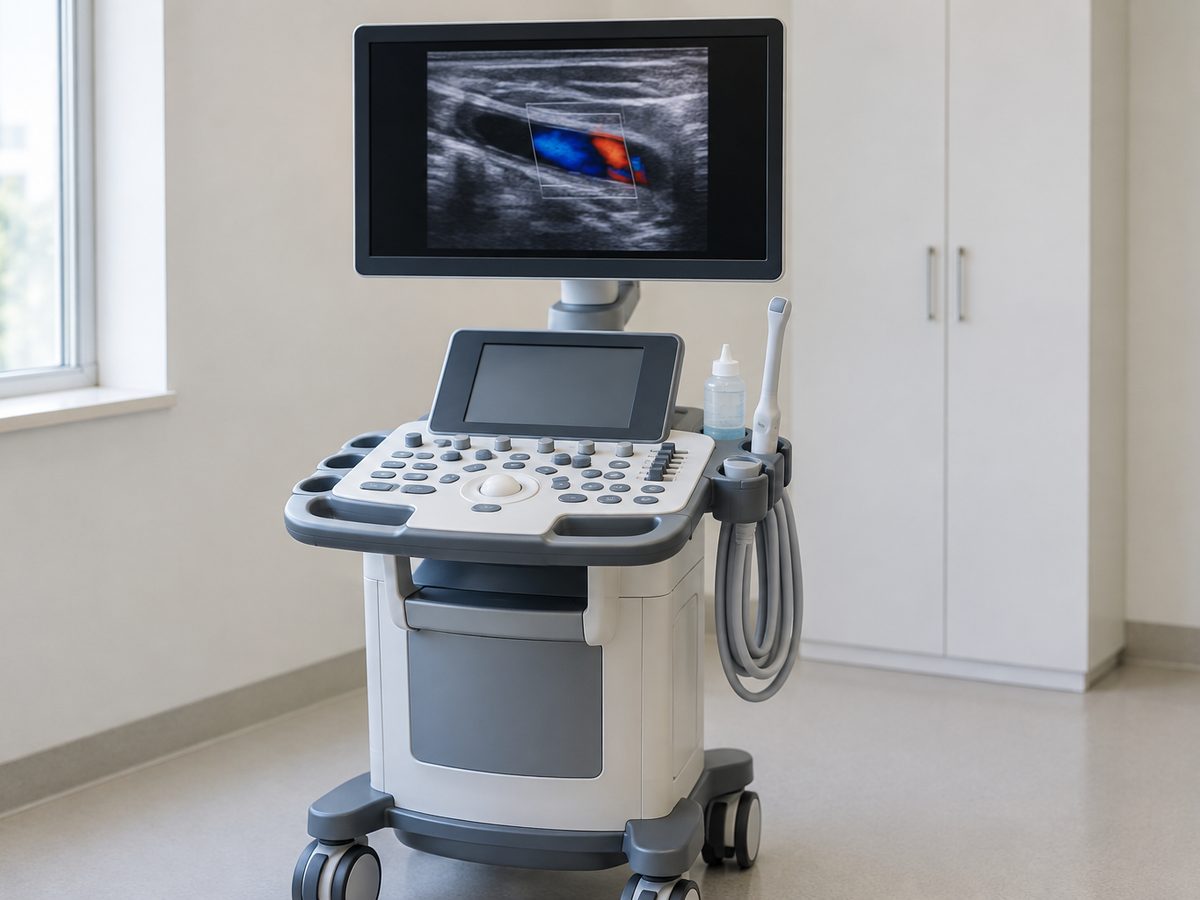
It uses sound waves to show the blood flowing in the veins and arteries.
What a duplex ultrasound scan shows, and how it works
In a duplex ultrasound, two kinds of ultrasound are used in one scan.
- A moving picture of the blood vessel and the tissue around it
- Doppler, which measures the direction and speed of the blood flow
Together they show whether blood flows the right way, and where it does not.
Duplex vs Doppler ultrasound, and a regular ultrasound
| Scan | What it shows |
|---|---|
| Regular ultrasound | A picture of the vessel and the tissue, without measuring blood flow |
| Doppler ultrasound | The direction and speed of the blood flow |
| Duplex ultrasound | Both together, in one scan |
Together, they let the scan find a leaking valve, a clot or a narrowed artery.
Duplex ultrasound of the legs for varicose veins
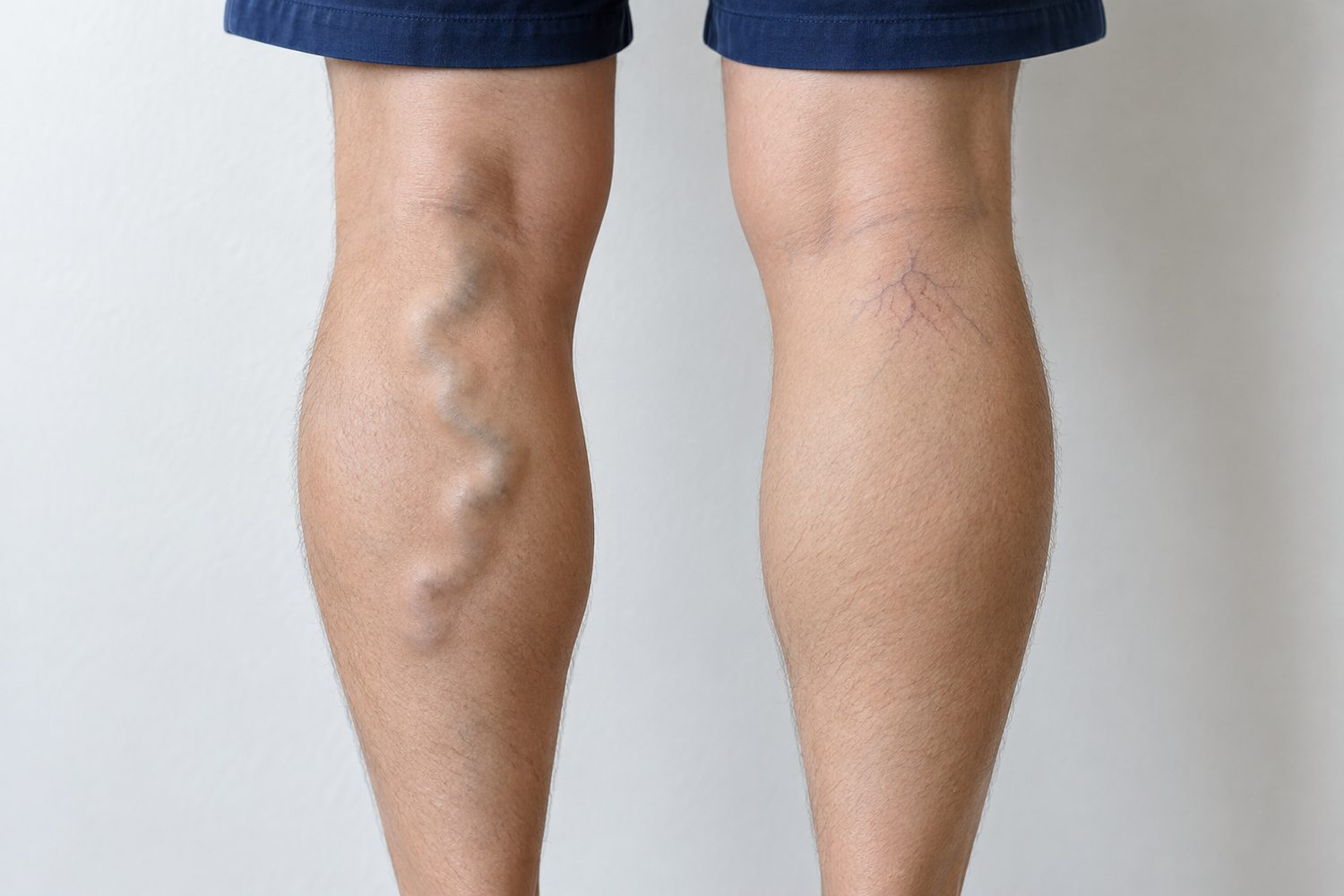
The bulging veins you can see are not always where the problem starts.
The scan looks for venous reflux, blood falling back through leaking valves, and shows:
- Which veins leak, and where
- Whether the deep veins are open and working normally
- Any clot in a surface vein or a deep vein
- The size and path of each vein, so treatment can be planned
European guidelines recommend a full duplex ultrasound of the leg veins as the main test for vein disease, both to diagnose it and to plan treatment.
Two people whose varicose veins look alike can leak in different places, so varicose vein treatment is planned from the scan.
Duplex ultrasound for DVT, a clot in a deep vein
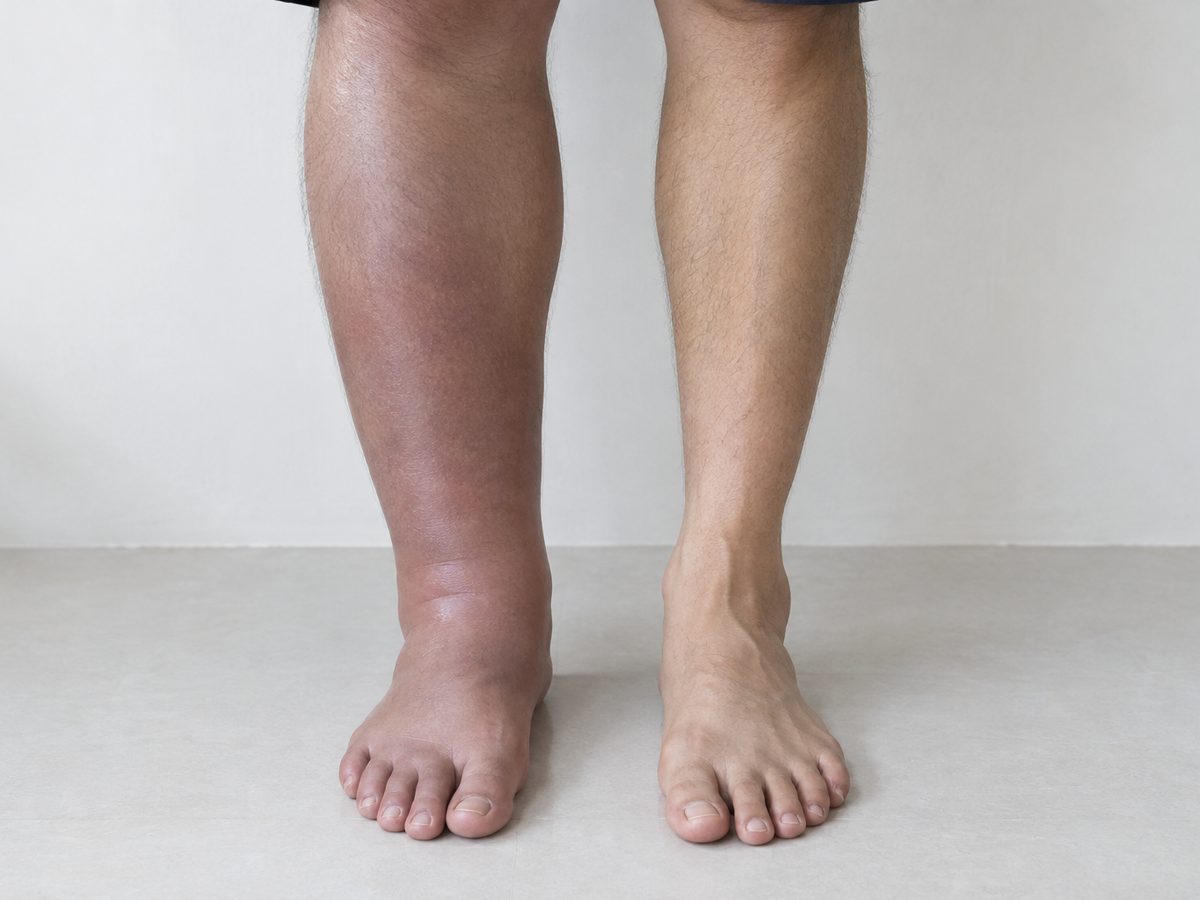
When a leg swells or aches, the scan can show a clot in a deep vein, called deep vein thrombosis or DVT.
If your whole leg swells suddenly, or your calf becomes severely painful, see a doctor the same day. If you also become short of breath or have chest pain, call 995 or go to the nearest A&E now.
How the scan checks the leg arteries for poor circulation
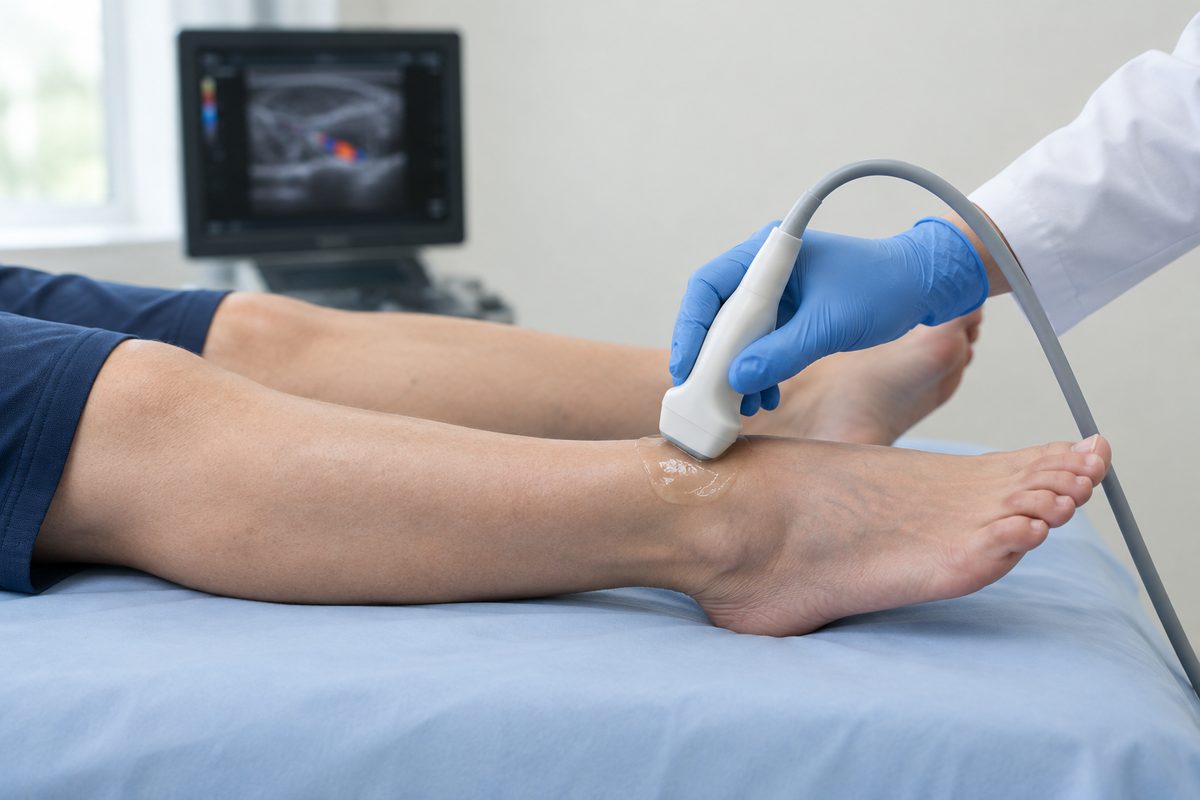
Narrowed leg arteries, called peripheral arterial disease, can cause leg pain or cramping during physical activity, such as walking.
The first test is usually the ankle-brachial index, which compares the blood pressure at the ankle with the pressure in the arm.
When treatment to restore blood flow is being considered, a duplex ultrasound of the arteries shows:
- Where an artery is narrowed or blocked
- How severe the narrowing is
Like the vein scan, it needs no radiation and no contrast dye.
Ultrasound is also used to check the main artery in the abdomen for a bulge, an abdominal aortic aneurysm.
Duplex ultrasound indications, from aching veins to leg pain on walking
A scan is usually advised when you have:
- Aching, heavy or swollen legs with bulging veins
- Skin near the ankle that darkens or thickens, or a wound there that has not healed within two weeks
- Leg pain or cramping when you walk, which eases with rest
- Varicose veins planned for treatment, or checked after it
What happens during the scan, and whether you need to prepare
There are no injections or medicines to prepare for.
Loose clothing helps, as the probe goes on bare skin, and you can bring any earlier scans or medical reports.
- Gel goes on the skin, and a small handheld probe moves along the leg.
- For the veins, much of the scan is done standing, when leaking valves show most clearly.
- The calf may be squeezed gently, or you may be asked to breathe in a certain way, to show any backward flow.
- A vein scan takes around 20 to 30 minutes.
Nearly everyone can have the scan, including during pregnancy, as it works with sound waves and no X-rays.
Your scan results, and what a positive result means

Dr Ooi explains your findings together with your symptoms and an examination.
A finding on the scan is not, on its own, a reason for treatment.
Terms you may see on a report:
Reflux: blood flowing backwards through a leaking valve.
GSV and SSV: the great and small saphenous veins, which are the two main surface veins of the leg.
Deep veins patent: the deep veins are open, a reassuring finding.
Stenosis or occlusion: a narrowed or blocked section of an artery.
The price of a duplex scan, and insurance
The duplex ultrasound price is quoted when you write in, together with the first consultation.
Insurers often ask for the scan report, as evidence that vein treatment is medically needed rather than cosmetic.
Costs and insurance sets out what treatment costs and how insurance may help.
Questions about a duplex scan
What is a duplex ultrasound?
A duplex ultrasound is a scan that shows a blood vessel and the blood flowing in it at the same time.
What is the difference between Doppler and duplex ultrasound?
Doppler measures the direction and speed of the blood, and a duplex ultrasound adds a picture of the vessel itself.
What is the difference between a duplex ultrasound and a regular ultrasound?
A regular ultrasound gives a picture but does not measure blood flow, while a duplex ultrasound shows both.
What happens if a Doppler test is positive?
A positive result, such as reflux in a vein or a narrowed artery, is explained together with your symptoms and examination. On its own, it is not a reason for treatment.
What is a normal result for a Doppler test?
In a normal vein scan, blood flows one way, towards the heart, and the deep veins are open. In a normal artery scan, blood flows freely, with no narrowed or blocked section.