Dr Desmond Ooi, a vascular surgeon, has a clinical interest in diseases of the aorta, the body's main artery.
An aortic dissection is a tear in the inner layer of the aorta's wall, and it is an emergency.
If you have sudden, severe pain in your chest or back, often described as tearing, call 995 or go to the nearest A&E now.
What happens inside the aorta when it tears
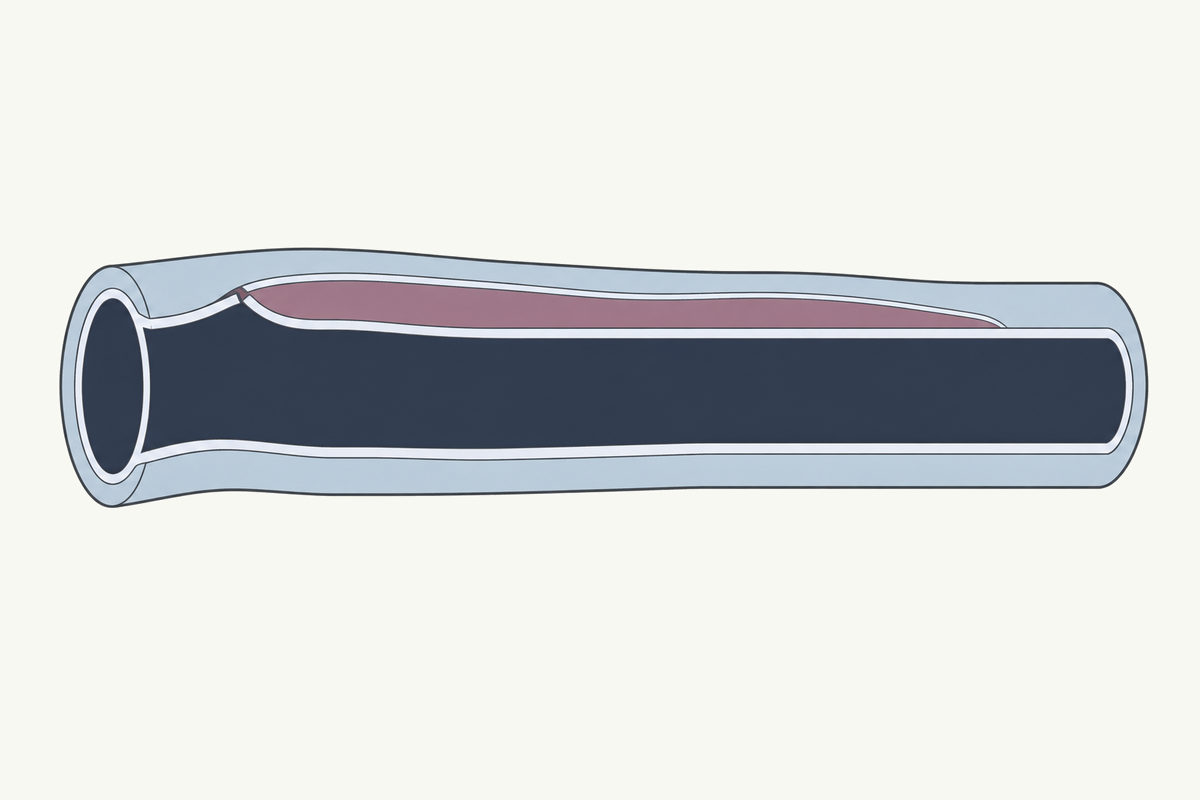
The wall of the aorta is made of layers.
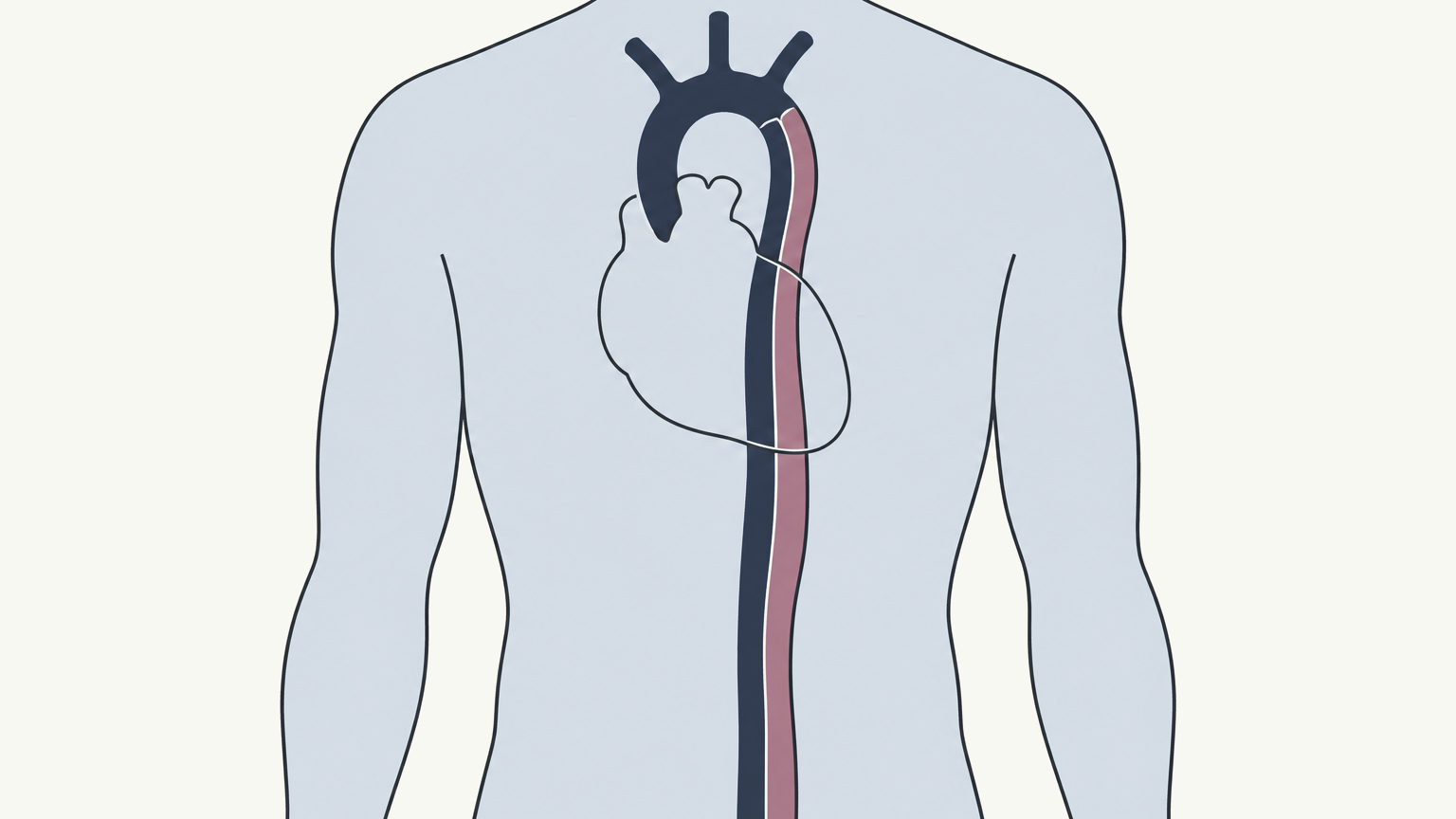
In a dissection, the inner layer tears, and blood is pushed through the tear into the wall.
The blood splits the layers apart and opens a second, false channel inside the wall.
- Blood supply: the false channel can press on the true one and cut the blood supply to organs such as the brain, the heart and the kidneys.
- Rupture: the thinned outer wall can burst, an aortic rupture, which causes heavy bleeding inside the body.
A tear on the aorta needs treatment in hospital at once.
Dissecting aorta signs, symptoms and when to call 995
The pain of a dissection usually starts suddenly, and is severe from the first moment.
- Severe pain in the chest or the back, often described as tearing or ripping
- Pain that moves, for example from the chest to the back
- Fainting or dizziness
- Shortness of breath
- Weakness or numbness on one side of the body, or trouble speaking
- Numbness or weakness in the legs

These signs can look like a heart attack or a stroke, and a hospital finds a dissection with a scan, usually a CT scan.
If you have these signs, call 995 or go to the nearest A&E now.
Aortic dissection types, and how each is treated
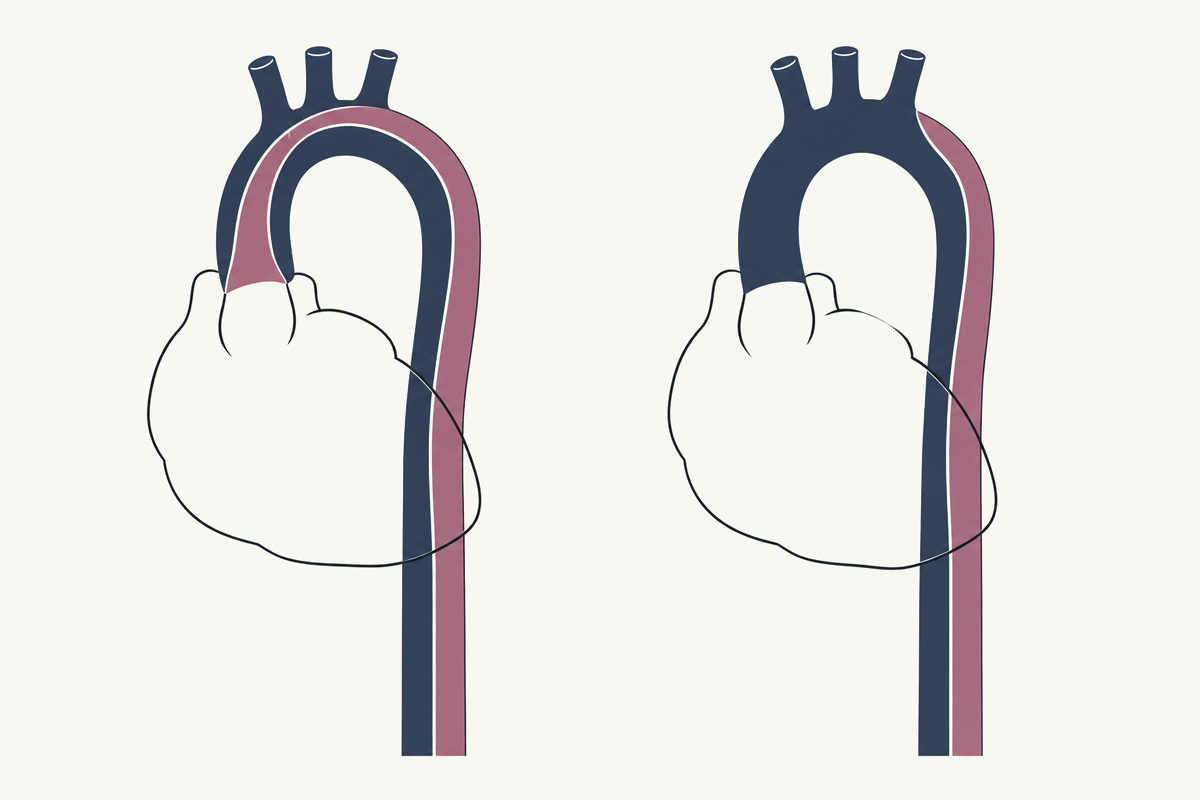
Doctors sort a dissection into two types by where it lies, because that decides the treatment.
Type A, which involves the part of the aorta next to the heart
Type A involves the first part of the aorta, as it rises from the heart, and is shown on the left of the drawing.
It is an emergency, usually repaired urgently by heart surgeons, who replace the torn section with a fabric tube in an open operation.
Type B aortic dissection, which lies beyond the arch
Type B starts beyond the arch, in the descending part of the aorta, and leaves the part next to the heart untouched, as on the right of the drawing.
It is usually treated first with medicines that lower the blood pressure and slow the heart, under close watch in hospital.
When a type B dissection needs a stent graft
A stent graft is used when the tear cuts off the blood supply to an organ or a leg, or when the aorta leaks or widens. It is passed up through an artery from the groin and opened inside the aorta, to cover the tear.
The European vascular surgeons' guideline of 2026 covers type B dissection, and a 2025 review of the guidelines for type B dissection found the stent graft is the usual repair when one is needed.
Aortic dissection causes, and who is at risk
High blood pressure is the most common cause, because years of high pressure strain the wall of the aorta.
Other risks include:
- An aneurysm of the aorta in the chest, called a thoracic aortic aneurysm
- An inherited condition of the body's connective tissue, such as Marfan syndrome
- A parent, brother or sister who has had a dissection
- Hardening of the arteries, called atherosclerosis
- A severe blow to the chest, as in a road accident
- Older age
A sudden surge in blood pressure can set off a tear where the wall is already weak.
A 2022 review of the risk factors describes how an aneurysm near the heart can enlarge over the years until its inner layer tears.
Questions patients ask about aortic dissection
What are the early warning signs of aortic dissection?
The first sign is usually sudden, severe pain in the chest or back, often described as tearing.
There is often no warning before it.
If you have this pain, call 995 or go to the nearest A&E now.
Can a person survive aortic dissection?
Yes, many people do, when it is found and treated quickly.
Without treatment, a dissection can be rapidly fatal, which is why it is treated as an emergency.
After treatment, blood pressure control and regular scans of the aorta are usually needed for life.
How is an aortic dissection repaired?
It depends on the type.
Type A is repaired in an open operation, in which heart surgeons replace the torn section with a fabric tube.
Type B is usually treated first with medicines, and a stent graft placed from inside covers the tear when a repair is needed.
What triggers an aortic dissection?
A tear starts where the wall of the aorta is already weakened, most often by years of high blood pressure.
An aneurysm, an inherited condition such as Marfan syndrome, or a severe blow to the chest can also lead to one.
How serious is an aortic tear?
It is a medical emergency.
The tear can cut off the blood supply to organs, or the aorta can burst.
It needs treatment in hospital at once.
Can an aortic tear be prevented?
Not always, but the risk can be lowered.
Keep your blood pressure under control.
If you have an aneurysm in the chest, have it watched with regular scans, and if a close relative has had a dissection, ask your doctor whether you should be checked.
How do you tell an aortic aneurysm from a dissection?
An aneurysm is a widening of the aorta, in the chest or in the abdomen, which usually grows slowly and without pain.
A dissection is a tear inside the wall, which usually starts suddenly, with severe pain.
An aneurysm in the chest can lead to a dissection, which is why a known aneurysm is watched with regular scans.