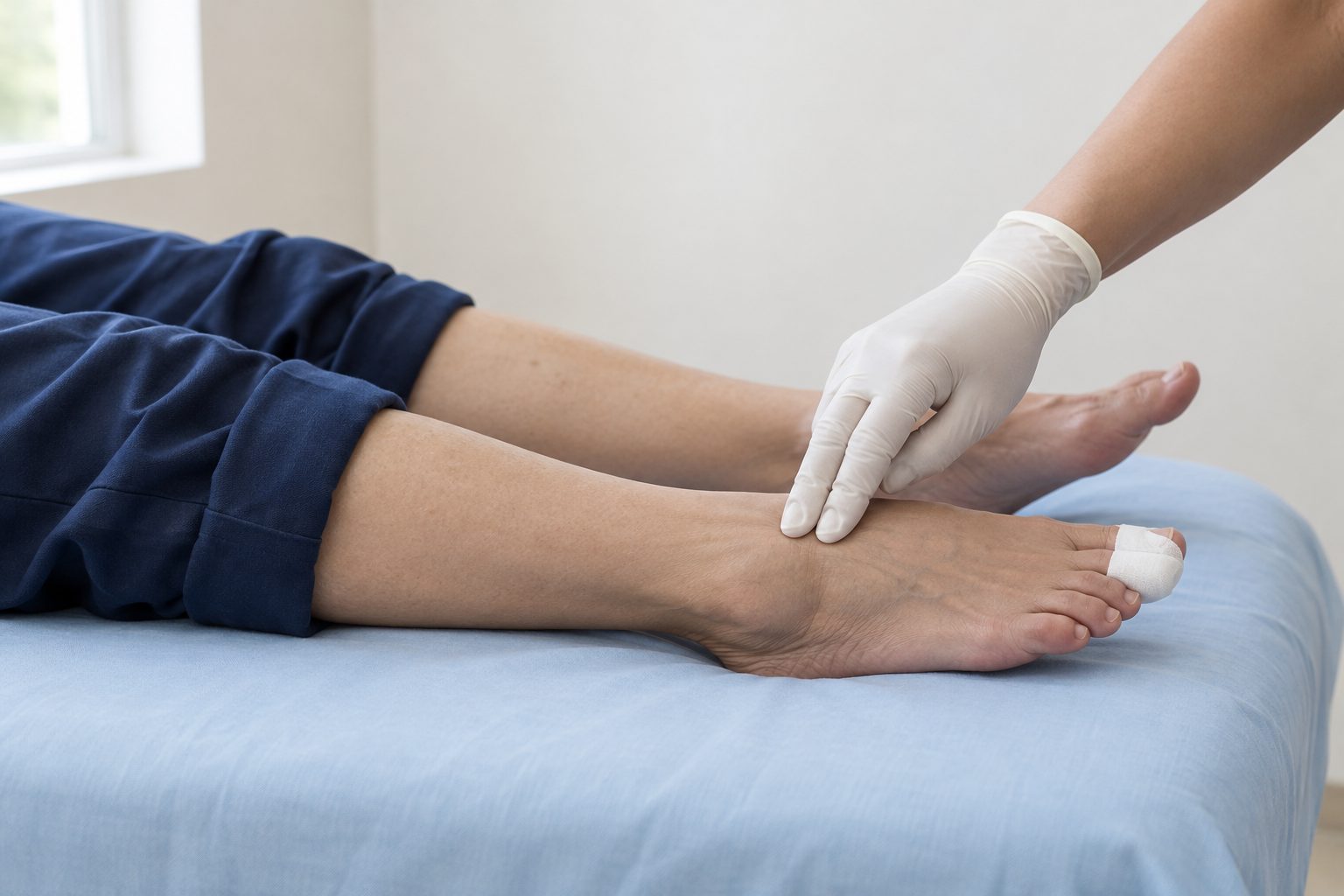
Dr Desmond Ooi, a vascular surgeon whose interests include diabetic foot disease, checks the blood flow to the foot and plans the care each diabetic foot wound needs.
What a diabetic foot ulcer is, and why it can be slow to heal
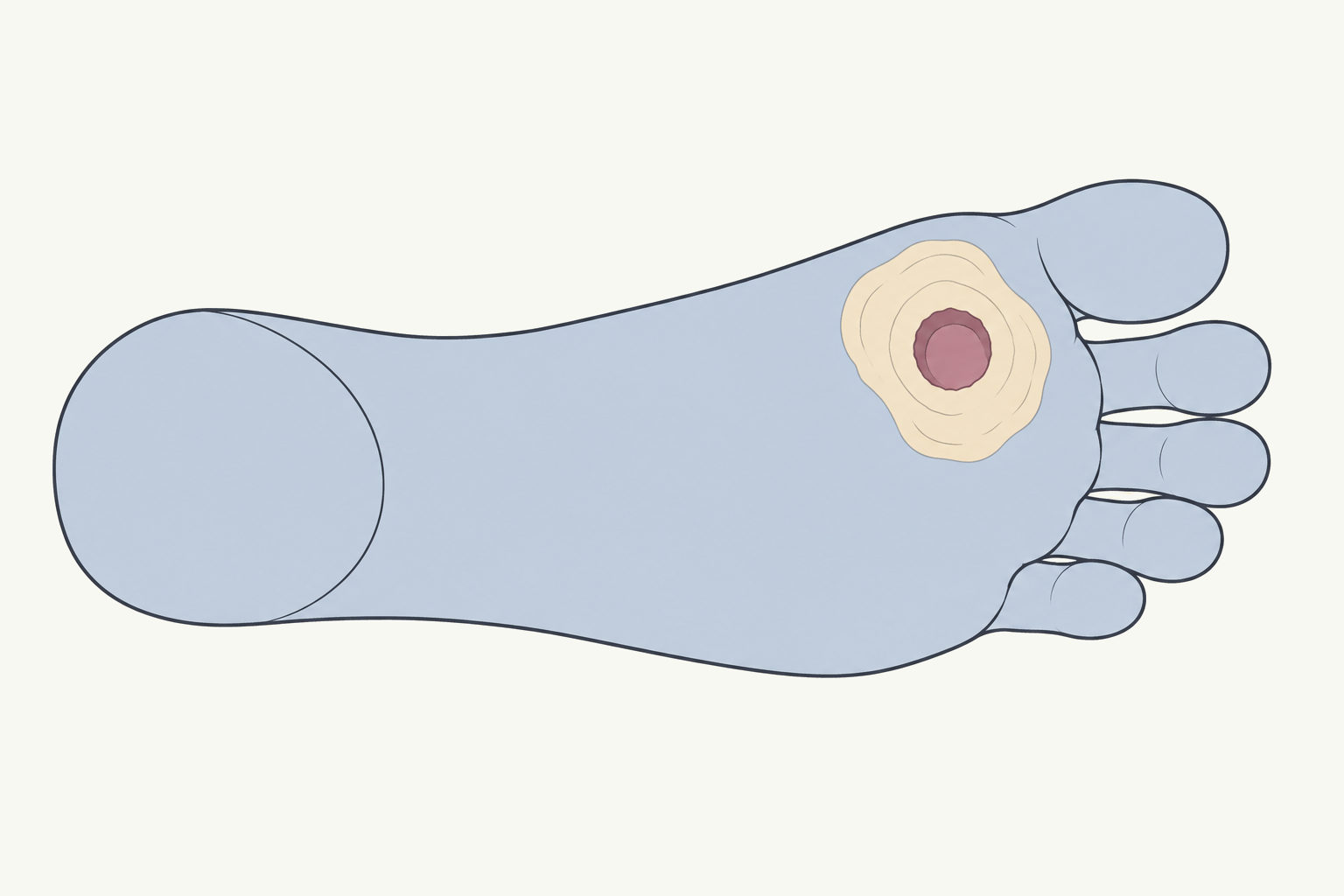
A diabetic foot wound is any break in the skin of the foot in a person with diabetes, from a blister or a cut to a deep sore.
When the break goes through the outer layer of skin into the layer below, doctors call it a diabetic foot ulcer.
Diabetic sores on feet often begin where a shoe rubs, or where thick, hard skin builds up under pressure and then breaks down.
How nerve damage and poor circulation lead to an ulcer is explained on the diabetic foot screening page.
Four things can slow healing:
- Pressure: walking on a foot that has lost some feeling keeps pressing on the wound.
- Blood flow: about half of people with a diabetic foot ulcer also have narrowed leg arteries, so less blood reaches the wound.
- Infection: an infection can spread quickly in the foot, most of all where blood flow is poor.
- Blood sugar: poorly controlled blood sugar is one of the factors that slow healing.
Signs that a diabetic foot wound needs a doctor the same day
An infected foot wound in a person with diabetes is an immediate threat to the foot.
See a doctor the same day if you notice any of these signs:
- Pus, or a foul smell from the wound
- Blood sugar readings rising for no clear reason
- New pain, or a wound that is getting bigger or deeper
Nerve damage can dull pain, so a wound that does not hurt can still be serious.
If the foot is hot, red and swollen, or the redness is spreading, or you have a fever or shivering, or a toe or patch of skin is turning black, call 995 or go to the nearest A&E now.
What to do on the day you find a wound on your foot
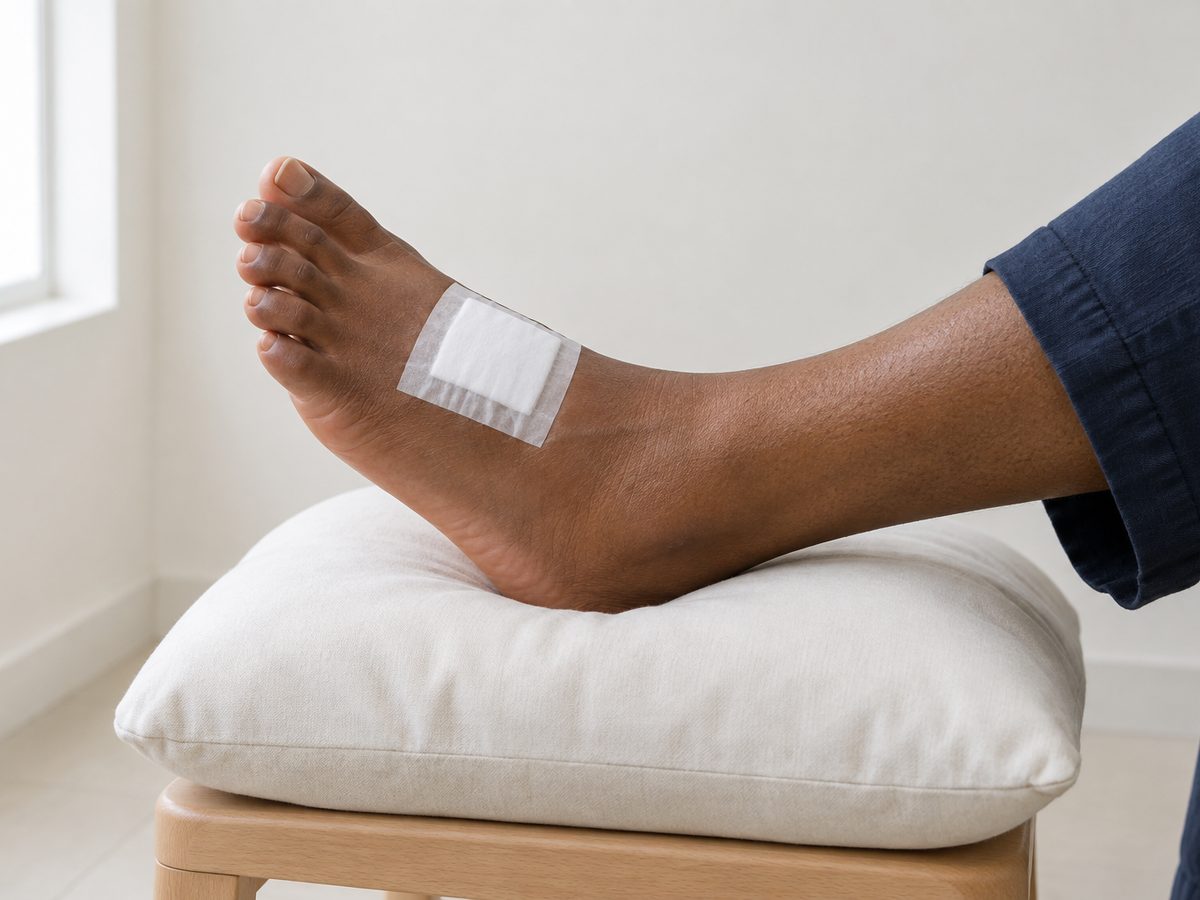
- Use mild soap and warm water to wash the wound gently, then dry the skin around it.
- Cover it with a clean, sterile dressing.
- Keep your weight off that foot as much as you can.
- Look at the wound every day, and arrange to see a doctor.
Wash the foot, but do not soak it, because soaking softens the skin.
The international diabetic foot guidelines advise that a foot ulcer in a person with diabetes is assessed and treated straight away.
How the blood flow to a diabetic foot wound is checked
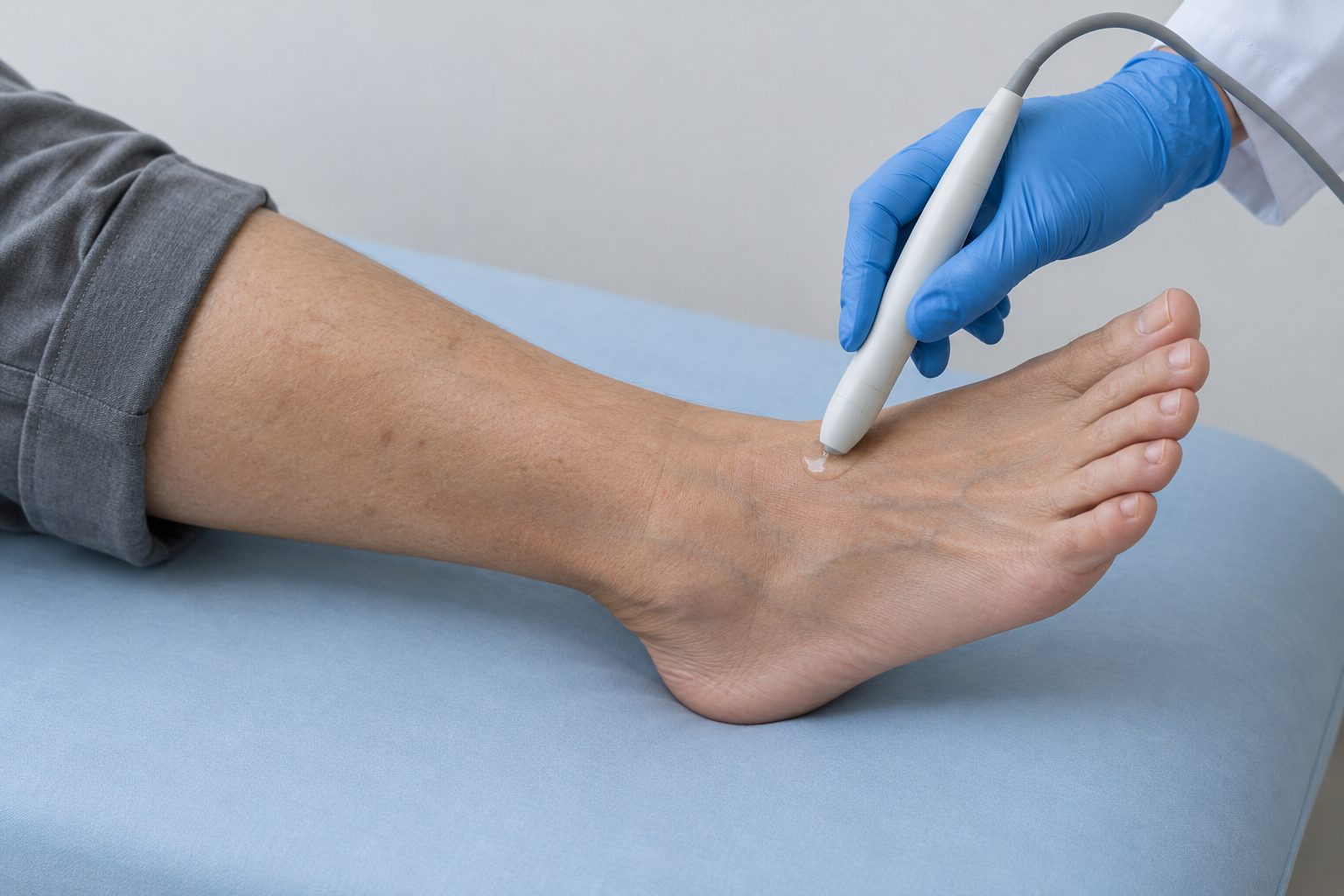
Poor blood flow affects whether a foot wound can heal.
The joint guideline of the diabetic foot and vascular surgery societies asks for it to be checked in everyone with diabetes and a foot ulcer.
The checks a vascular surgeon makes include:
- Feeling the pulses on the top of the foot and behind the ankle
- Listening to the blood flow in the foot arteries with a small handheld Doppler probe
- Comparing the blood pressure at the ankle and at the big toe with the pressure in the arm
- A duplex ultrasound scan of the leg arteries, when more detail is needed
Diabetes can harden the artery walls and make the ankle reading look normal when blood flow is poor, so the toe reading and the Doppler sounds are checked too.
When the checks show poor blood flow, or a wound is not improving, the guideline asks for a vascular specialist to be consulted about treatment to restore it.
How a diabetic foot wound is treated
Treatment works on what keeps the wound open, as well as on the wound itself.
Taking pressure off the wound
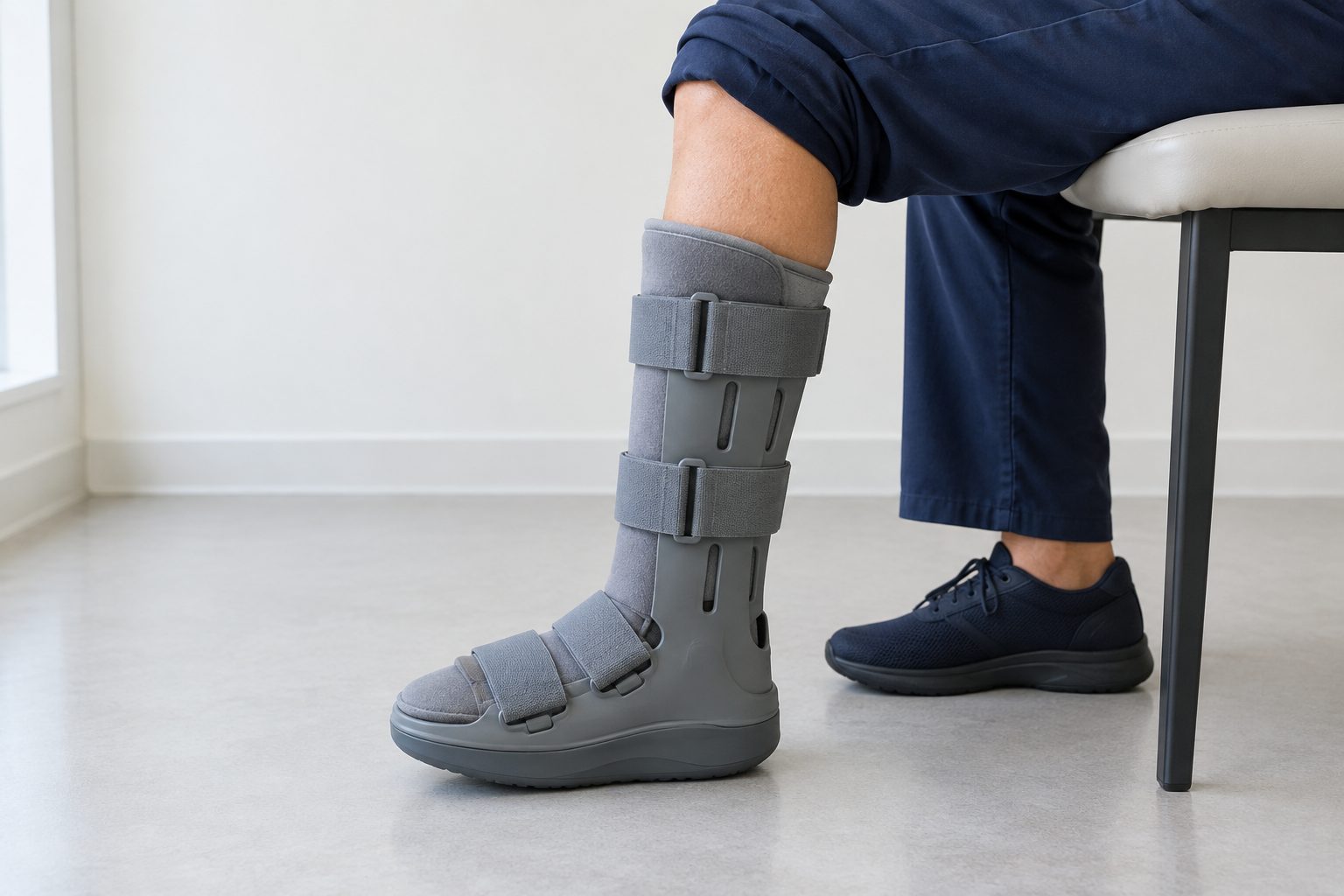
For an ulcer on the sole caused by pressure, the first choice is a knee-high cast or boot that cannot be taken off, so the foot is protected with every step.
A removable boot, or special footwear, is used when that is not suitable.
Treating infection
An infected wound is treated with antibiotics.
A deep infection may need an operation to drain pus and remove dead tissue, sometimes with a stay in hospital.
Restoring blood flow
Where the leg arteries are narrowed, angioplasty widens an artery from inside, and bypass surgery carries blood around a blocked one.
Both are done to bring more blood to the wound.
Cleaning and dressing the wound
Dead tissue and the hard skin around the wound are removed as often as needed, a step called debridement.
A dressing for diabetic foot ulcer care is chosen to soak up excess fluid and keep the wound moist.
Blood sugar and general health
Blood sugar is brought under control, with insulin if needed, and swelling or poor nutrition is treated.
After a diabetic foot ulcer heals, the foot still needs protecting
Ulcers on feet often come back after healing.
The international prevention guideline gives the figures: about 40 in 100 people have another ulcer within a year, and about 65 in 100 within three years.
Regular foot checks and well-fitting footwear are part of protecting the healed foot.
Questions about diabetic foot wounds and sores
How do you treat a diabetic foot wound?
Treatment has five parts: taking pressure off, treating infection, restoring blood flow, cleaning and dressing the wound, and controlling blood sugar.
How long does it take for a diabetic wound to heal?
It depends on the size and depth of the wound, the blood flow, any infection, and how well pressure is kept off it.
The guideline uses four weeks as a check: if a wound has not shrunk by about half by then, despite care for infection, blood sugar and pressure, its blood flow is checked again with a vascular specialist.
What do diabetic sores look like?
Many are sores on the sole, often under the ball of the foot, with a rim of thick, hard skin around them.
A diabetic ulcer on toe tips often comes from a curled toe pressing down, or from a shoe rubbing.
Many are painless because of nerve damage, though an ulcer caused mainly by poor blood flow is usually painful.
How do you tell if a diabetic wound is healing or infected?
A healing wound gets smaller over the weeks, so it is measured at each visit.
An infected wound shows at least two of these: redness, warmth, swelling or hardness around it, pain or tenderness, or pus.
Nerve damage and poor blood flow can make these signs weaker, so show any change to a doctor.
How can a diabetic wound heal faster?
The guidelines build treatment on keeping pressure off the wound, treating infection early, controlling blood sugar and restoring blood flow.
They also advise stopping smoking, to protect the heart and blood vessels.
Do ulcers heal faster covered or uncovered?
A diabetic foot ulcer is kept covered, with a dressing chosen to soak up excess fluid and keep the wound moist.
A trained nurse or doctor should still look at it regularly.
What ointment should I use on a diabetic foot wound?
The guidelines do not support antiseptic or antimicrobial creams and dressings for routine ulcer care.
Antibiotics are given when a wound is infected.
Use only what your doctor advises for your wound.