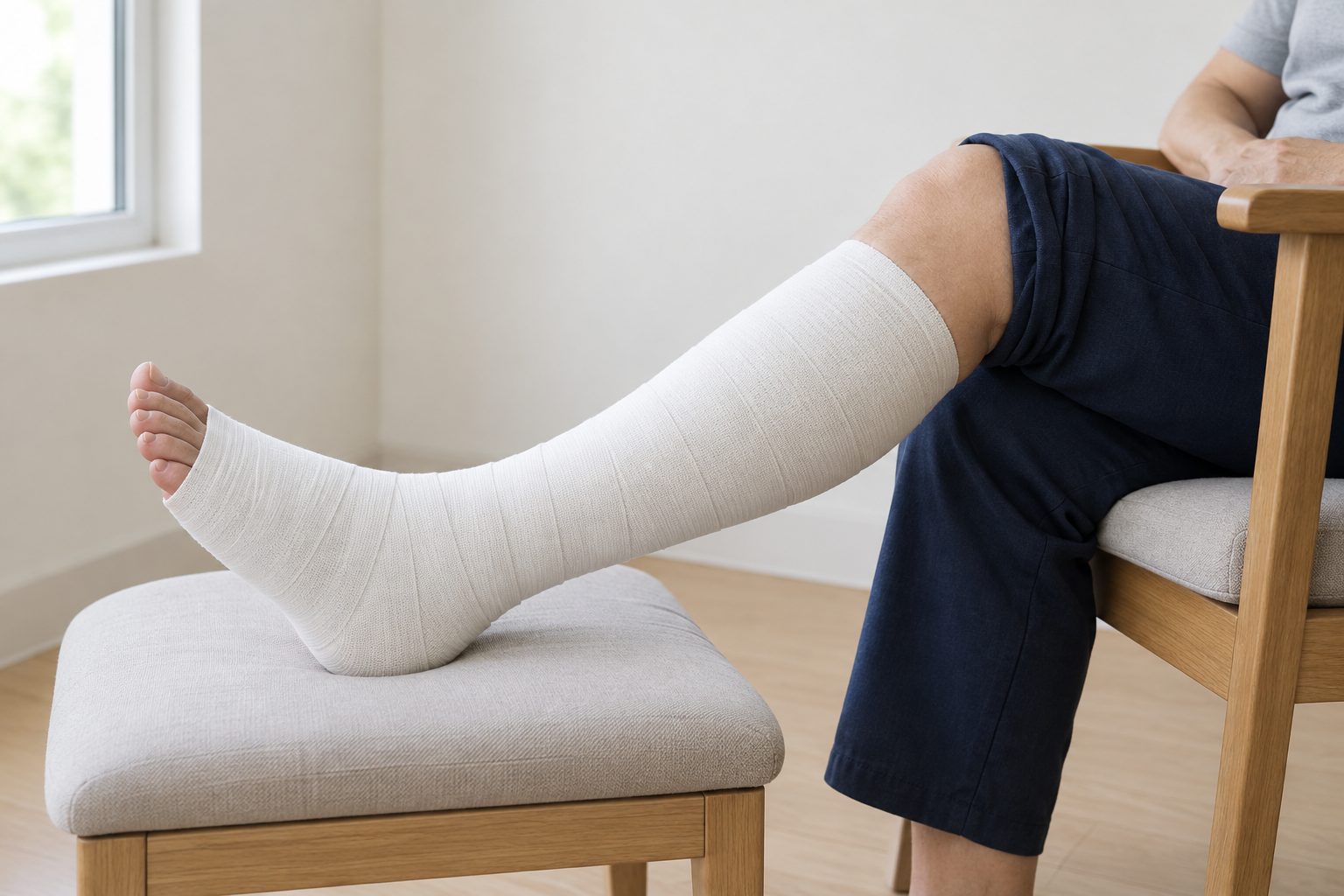
Dr Desmond Ooi, a vascular surgeon, looks for what keeps a leg or foot wound from healing, starting with the blood flow in the leg's arteries and veins.
When a slow-healing wound needs a doctor's check
A wound normally heals in stages: bleeding stops, inflammation settles, new tissue fills the gap, and skin closes over it.
In a chronic wound, these stages stall, and the wound stays open far longer than expected.
There is no exact number of weeks that makes a wound chronic, and a 2022 review of chronic wounds calls time-based definitions artificial.
For leg wounds that won't heal, one simple rule helps:
A wound on the leg or foot that has not healed within two weeks needs a doctor's check. If you have diabetes, have any foot wound checked straight away.
The usual reasons a wound is not healing
Most wounds on the legs and feet that will not heal have one or more of these causes:
- Poor blood flow in the arteries: narrowed leg arteries, called peripheral arterial disease, bring too little blood for the wound to heal.
- Vein disease: faulty valves in the leg veins raise the pressure in the lower leg, and the skin there can break down into a venous leg ulcer, the most common kind of chronic wound.
- Diabetes: nerve damage and poor blood flow make a foot wound slow to heal.
- Infection: an infection in the wound can delay healing and spread into the skin around it.
- Pressure: lying or sitting in one position for long periods, or walking on a numb foot, keeps pressing on the same spot.
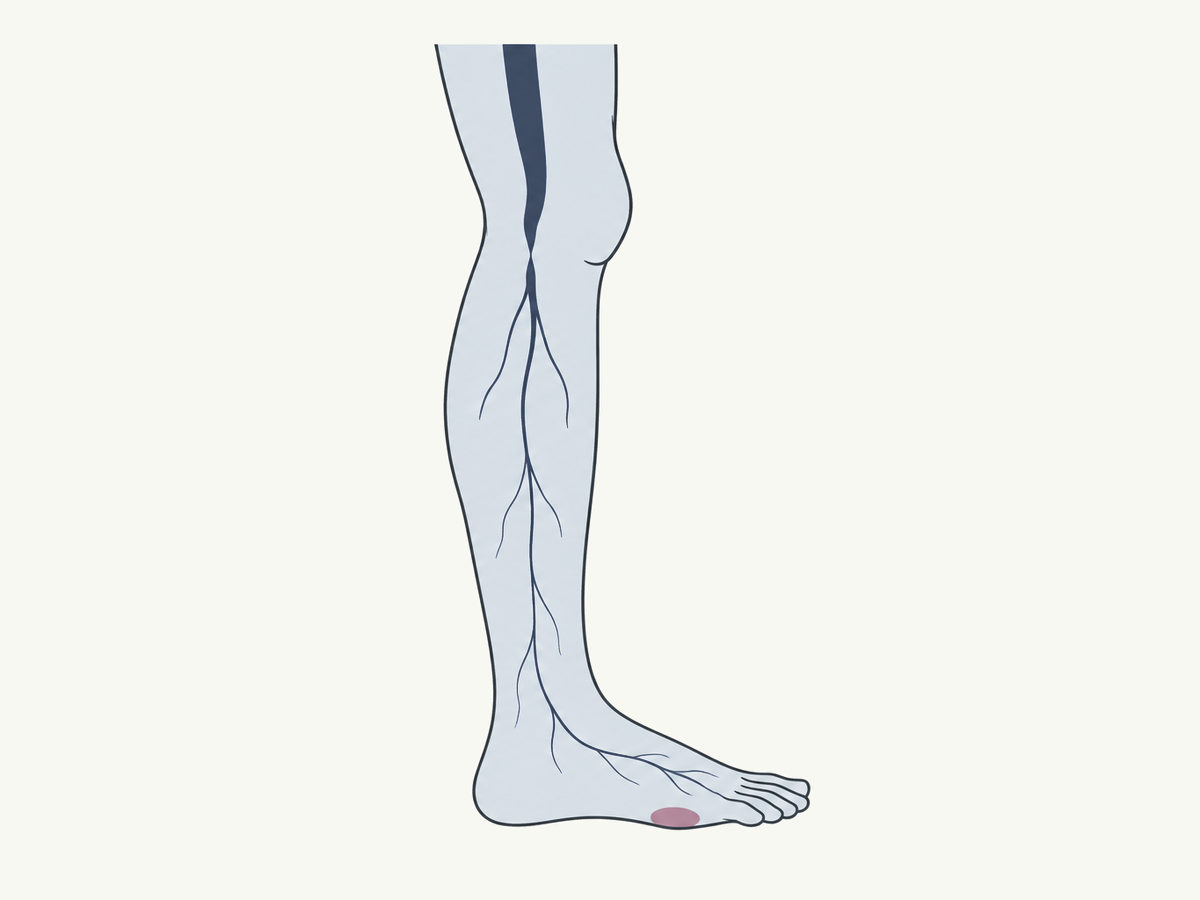
Some people have more than one cause, such as diabetes with narrowed arteries, so a sore that won't heal is checked for each of them.
How Dr Ooi looks for the cause of a wound that will not heal
The checks look at the blood flow in both the arteries and the veins, because either can keep a wound open.
- Where the wound is: a venous ulcer usually sits on the inner side of the lower leg, while wounds from poor artery flow tend to be on the ankle and toes, and diabetic ulcers on the toes and soles.
- The pulses: he feels for the pulses in the feet.
- The ankle-brachial index: the blood pressure at the ankle is compared with the pressure in the arm.
- The scan: a duplex ultrasound scan shows the blood flow in the leg veins and arteries.
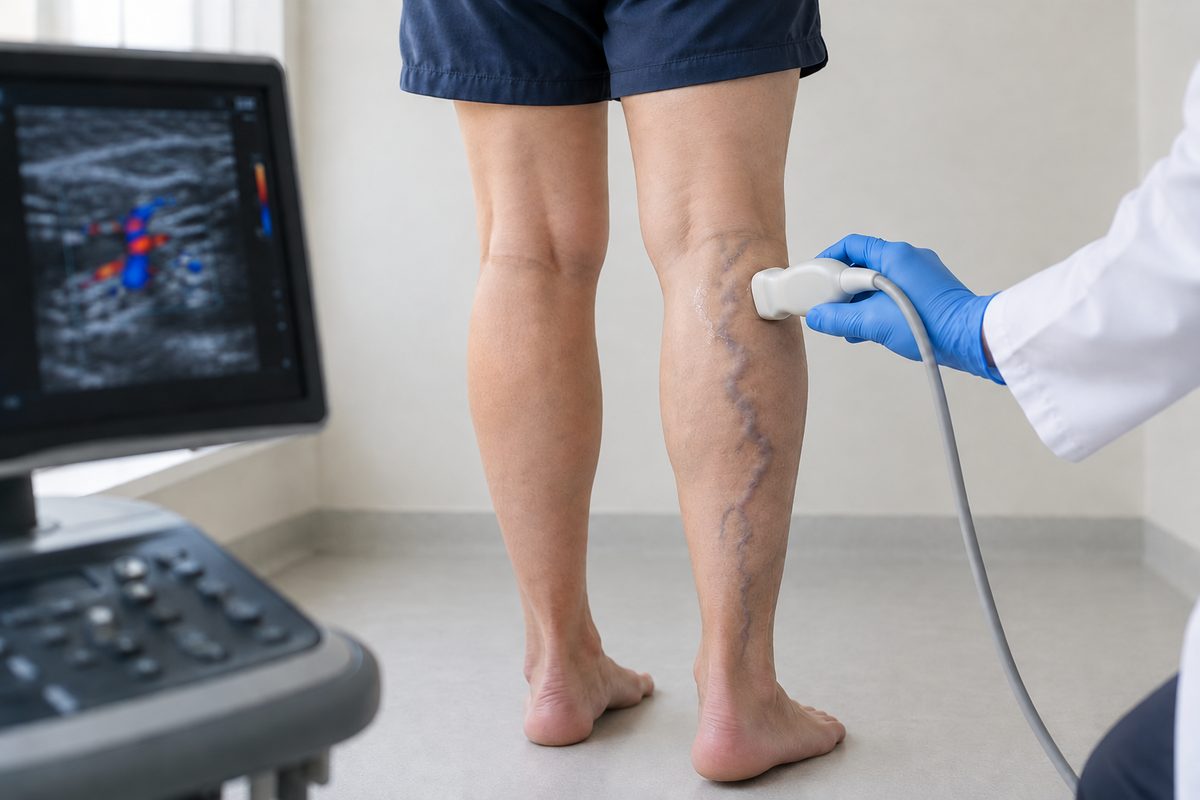
When a wound looks unusual, or does not heal despite the right care, a small sample from its edge, called a biopsy, may be taken to find out why.
How a non-healing wound is treated, cause by cause
Chronic wound care treats what keeps the wound open, as well as the wound itself.
When the arteries are narrowed
Angioplasty widens a narrowed artery from inside, and bypass surgery carries blood around a blocked one.
Both are done to bring more blood to the wound.
When the veins are the cause
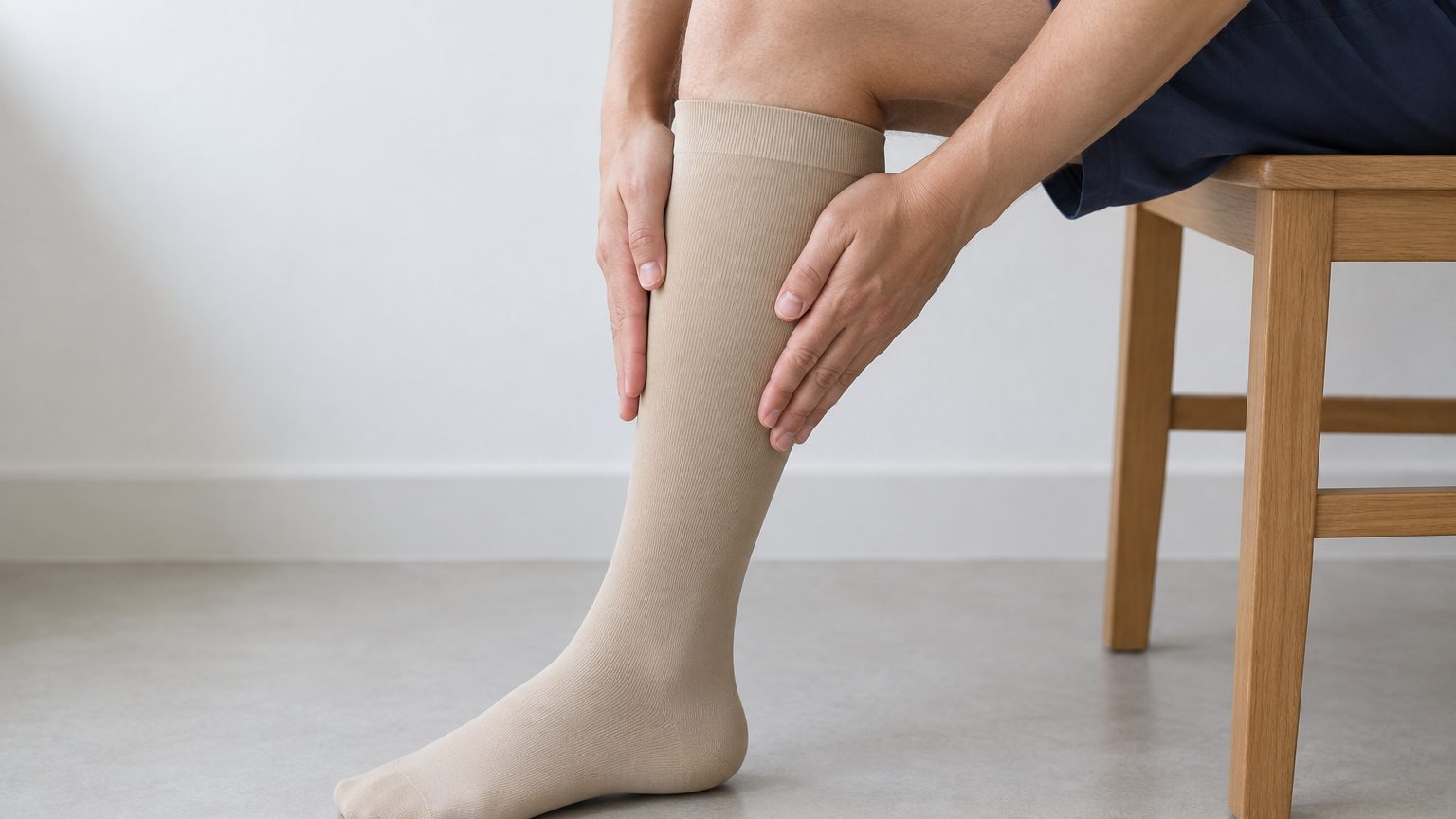
Compression with firm bandages or stockings is the main treatment for a venous leg ulcer, once the arteries have been checked.
The European vein guideline advises against sustained compression when the blood pressure at the ankle or toe is low.
It also recommends closing the faulty surface vein from inside early, to speed up ulcer healing.
Clearing and dressing the wound
Dead tissue is removed, a step called debridement, and the dressing is chosen to suit the amount of fluid from the wound.
Infection and pressure
Antibiotics are used when a wound is infected, not for every wound.
Pressure is taken off the spot with cushions, a pressure-relieving mattress or, for a foot, a walking boot.
Signs that a wound needs a doctor the same day
See a doctor the same day if a wound shows any of these signs:
- Redness, warmth or swelling spreading into the skin around it
- Pus, or a foul smell from the wound
If you also have a fever or shivering, or if skin on a toe or around the wound is turning black, call 995 or go to the nearest A&E now.
Questions about wounds that won't heal
What happens if you have a wound that doesn't heal?
It can become infected, and the infection can spread into the skin and deeper tissues.
Where blood flow is poor or diabetes is present, an untreated wound can lead to gangrene and, at worst, the loss of part of the foot or leg.
How do you treat a non-healing wound?
The cause is treated as well as the wound: restoring blood flow, treating vein disease, clearing infection and dead tissue, and taking pressure off.
The treatment section above sets out each one.
When is a wound considered chronic?
A wound is called chronic when it fails to heal in the time expected.
There is no fixed cut-off, but a leg or foot wound still open after two weeks should be checked by a doctor.
How long is too long for a wound to heal?
Two weeks without healing is the point to have a leg or foot wound checked.
For a diabetic foot ulcer, the joint vascular guideline uses four weeks as a check: a wound that has not shrunk by about half by then needs its blood flow checked again.
Why is my wound not healing fast?
The usual reasons are poor blood flow, vein disease, diabetes, infection and pressure on the wound, and some people have more than one.
A doctor's examination, with a scan where needed, looks for each of them.
Can an unhealed wound become cancerous?
Skin cancer is one of the less common causes of a wound that will not heal.
When a wound does not heal despite the right care, a small sample from its edge, a biopsy, may be taken to rule it out.