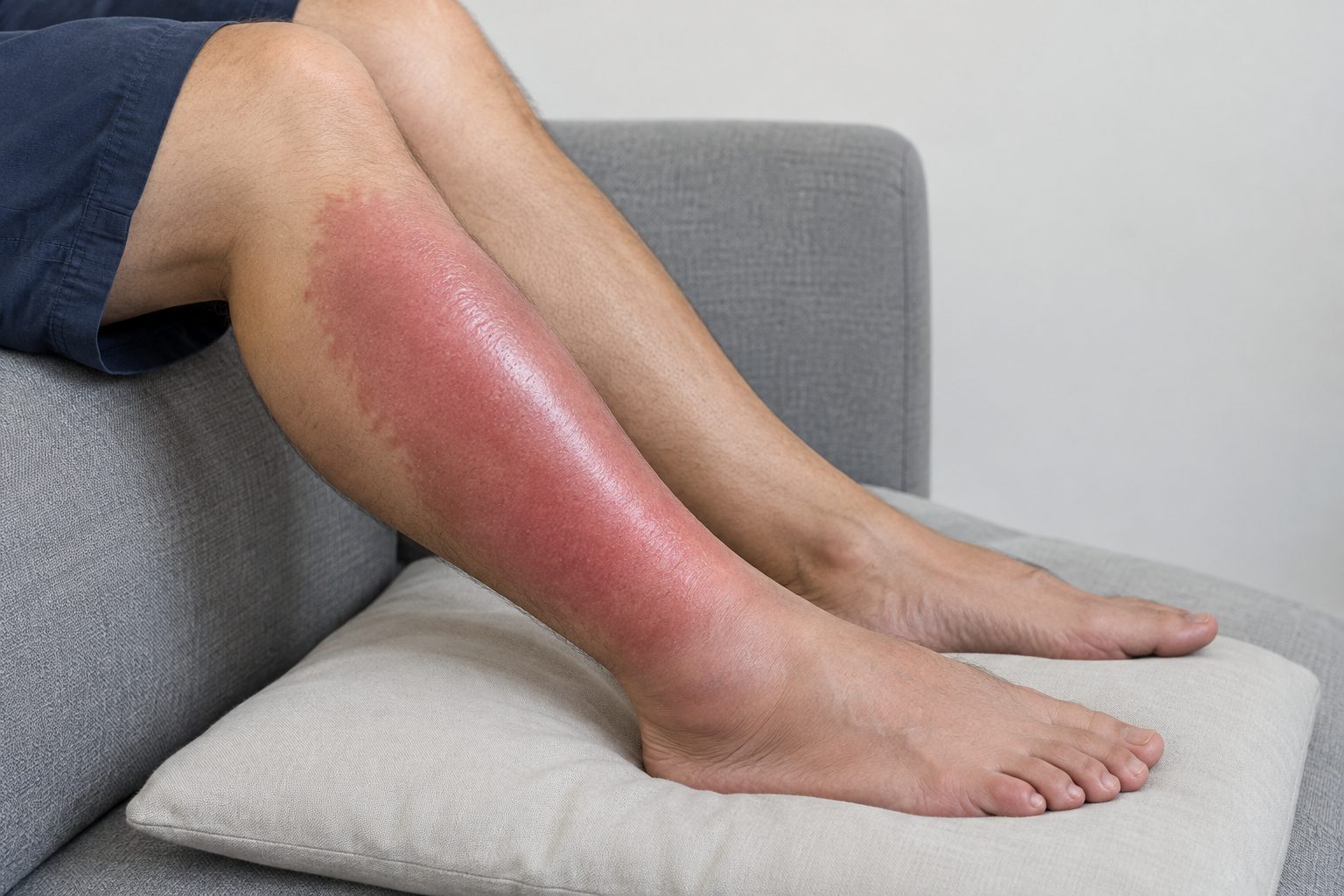
Dr Desmond Ooi, a vascular surgeon, explains how cellulitis of the leg looks, how it is treated, when to worry, and why swollen legs raise its risk.
Cellulitis needs a doctor's check, because it is treated with antibiotics.
What cellulitis means, and how it looks on the leg
Doctors use the word cellulitis, meaning an infection of the deeper layers of the skin and the tissue just beneath them.
A 2022 review describes how it usually begins: over a short time, the skin becomes red, warm, swollen, tender and painful.
On the leg, cellulitis causes changes you can see and feel:
- skin that looks red, or darker than usual on brown or black skin
- warmth when you touch it
- swelling
- pain or tenderness
- sometimes blisters, a fever or a feeling of being unwell
It starts in one area of skin, and that area can spread.
What causes cellulitis, and why swollen legs raise the risk
Cellulitis usually starts when bacteria get in through a break in the skin.
The break can be as small as a cut, a scratch or a crack in dry skin.
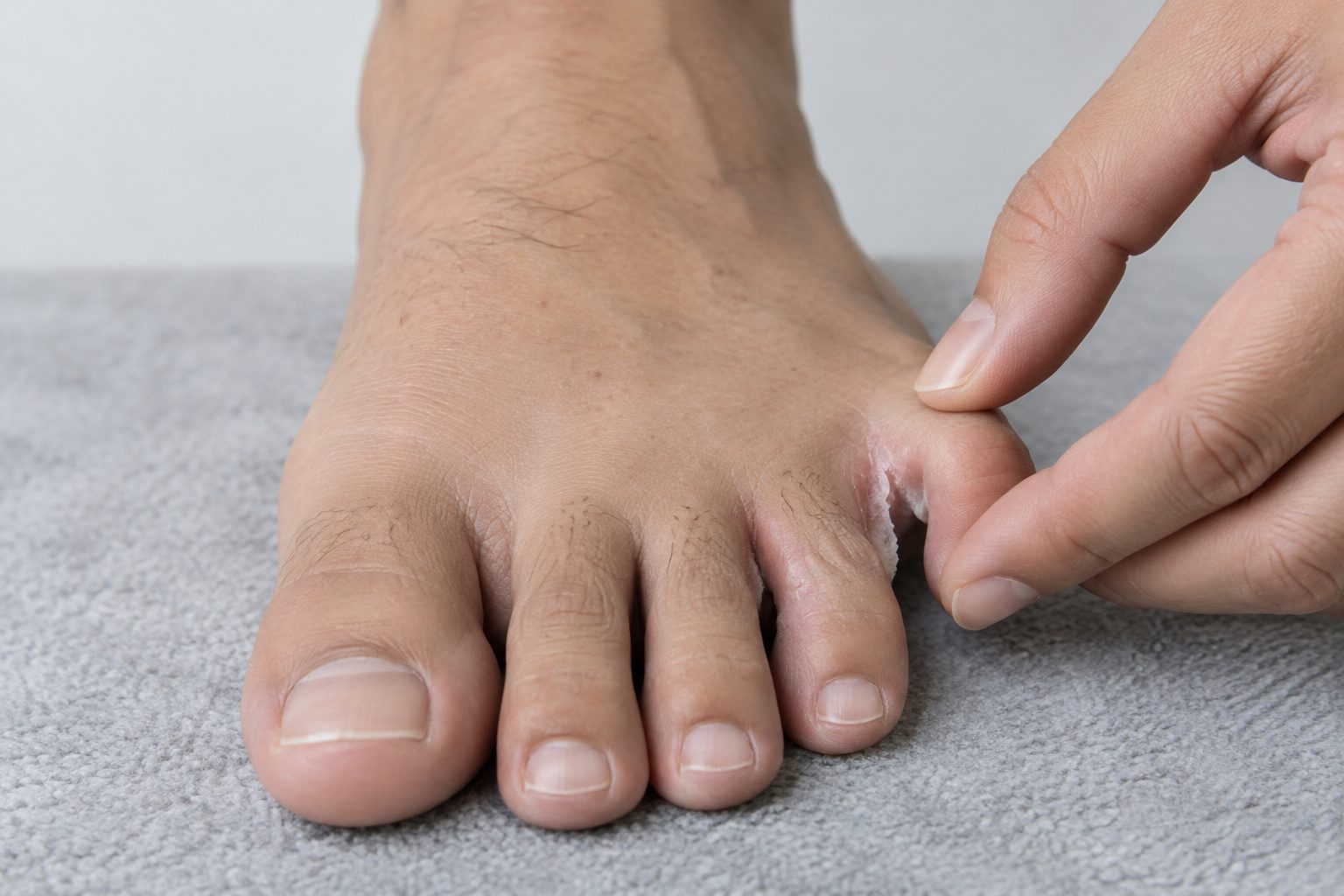
Cellulitis on the feet can start from cracked or peeling skin between the toes, as with athlete's foot.
A review of studies found cellulitis of the leg more likely in people with:
- cellulitis in the past
- a wound or a leg ulcer
- long-term leg swelling, including lymphoedema
- eczema or other skin conditions that are scratched open, or athlete's foot
- a body mass index (BMI) over 30
Long-term leg swelling, leg ulcers and wounds that do not heal are among the conditions a vascular surgeon treats.
Dry skin from varicose veins can crack into small wounds, through which bacteria can enter and cause cellulitis.
In diabetes, reduced feeling in the feet can let a small injury go unnoticed, and an untreated foot injury can lead to cellulitis.
Cellulitis treatment usually starts with antibiotic tablets
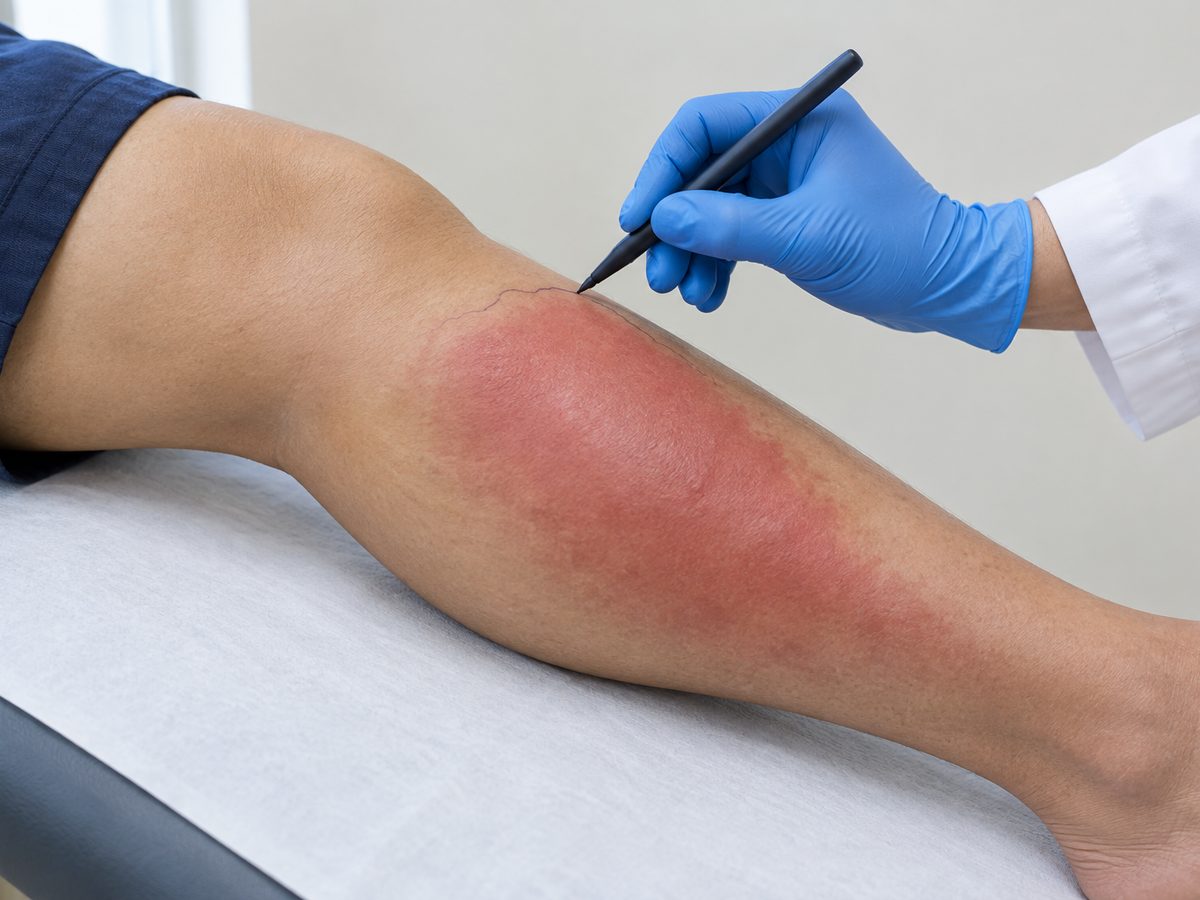
Before treatment, a doctor may draw around the edge of the redness with a skin pen, so that any spread can be seen.
Antibiotics for cellulitis are usually tablets.
When the infection is severe, or tablets cannot be taken, they are given through a drip.
The UK's NICE guideline on cellulitis sets a course of 5 to 7 days, longer for some people.
The skin takes time to return to normal, so some redness can remain when the course ends.
Symptoms can get worse in the first 48 hours of treatment, and should then start to improve.
If the leg has not started to improve within 2 to 3 days, see your doctor again.
During treatment:
- raise the leg on a pillow or a chair when you sit or lie down, to reduce the swelling
- move the ankle and knee gently from time to time, so they do not stiffen
- drink plenty of fluids
When to worry about cellulitis, and when to act the same day
With cellulitis, when to worry depends on how fast it spreads and how unwell you feel.
It can become serious if the infection spreads into the blood, which is called sepsis, or into the deeper tissues.
See a doctor the same day if a red, swollen area on your leg:
- spreads quickly beyond where it started
- becomes severely painful, or hurts far more than it looks
If you also have a fever with chills or shivering, become confused, feel faint, or have a fast heartbeat or fast breathing, call 995 or go to the nearest A&E now.
A blood clot in a deep vein of the leg, called deep vein thrombosis, can also make one leg red, swollen and painful.
If your whole leg swells suddenly, or your calf becomes severely painful, see a doctor the same day.
A red, swollen leg can have another cause
Other conditions can look like cellulitis, and some of them come from the veins.
In one US hospital study, 79 of 259 people admitted with cellulitis of the leg, about 3 in 10, turned out to have another condition.
Cellulitis usually affects one leg, so redness in both legs at the same time points more often to another cause.
Long-term vein disease can darken the skin of the lower legs, or cause a rash called venous eczema, without any infection.
Redness around an insect bite can also be a reaction to the bite rather than an infection.
Antibiotics do not treat these conditions.
The infection can return, so the swelling or wound behind it is treated too
Having had cellulitis before raises the chance of another episode.
The NICE guideline asks doctors to manage the conditions that make cellulitis more likely, such as diabetes, vein disease, eczema and leg swelling.
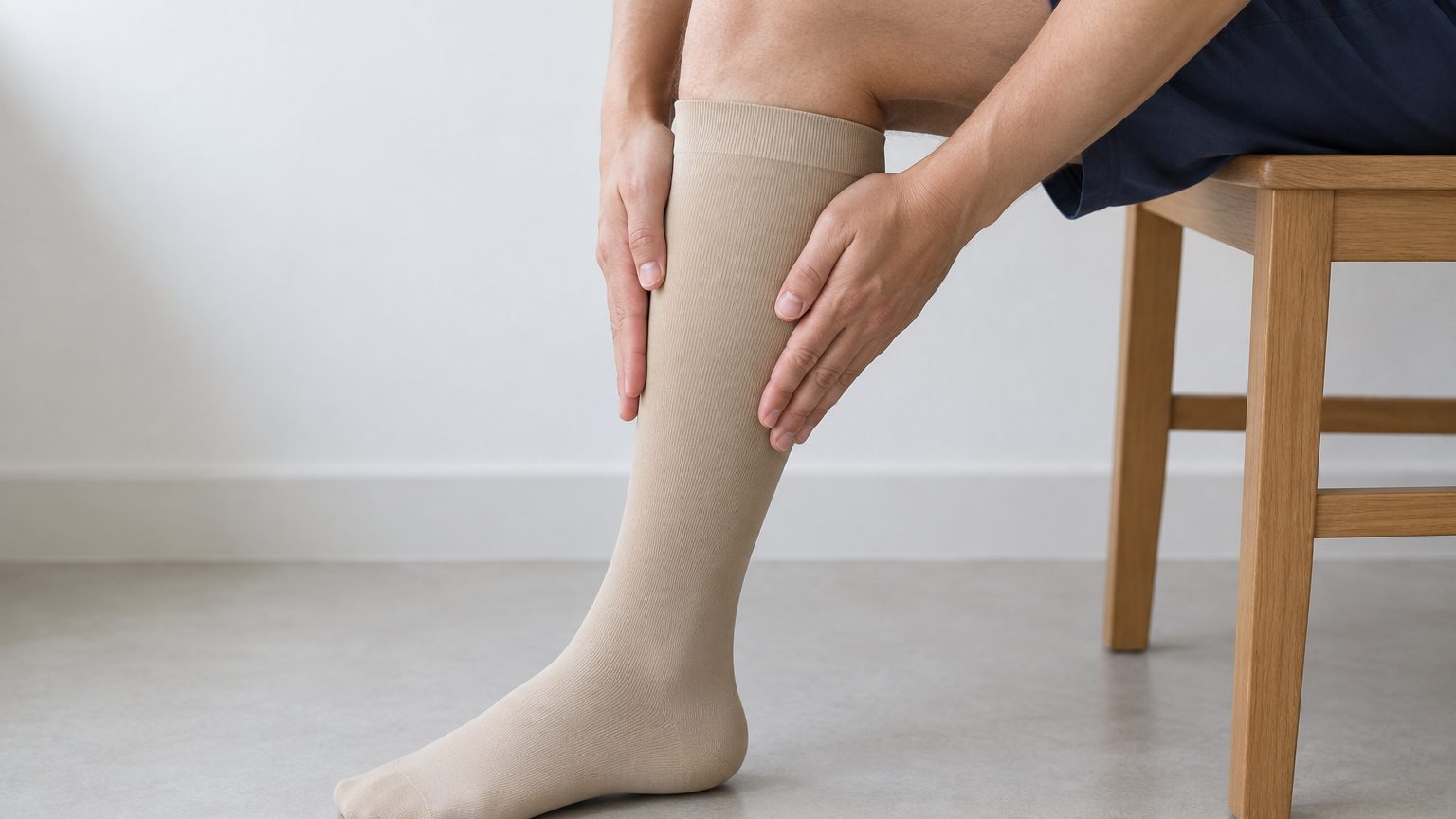
In a small trial in people with long-term leg swelling and repeated cellulitis, daily compression on the leg with prevention advice was compared with advice alone. It came back in 6 of 41 (15%) who wore compression, against 17 of 43 (40%) given advice alone.
The trial was small and stopped early, so the size of the benefit is not certain.
Compression stockings do not suit everyone, for example people with severely narrowed leg arteries or a skin infection, so ask a doctor before you start.
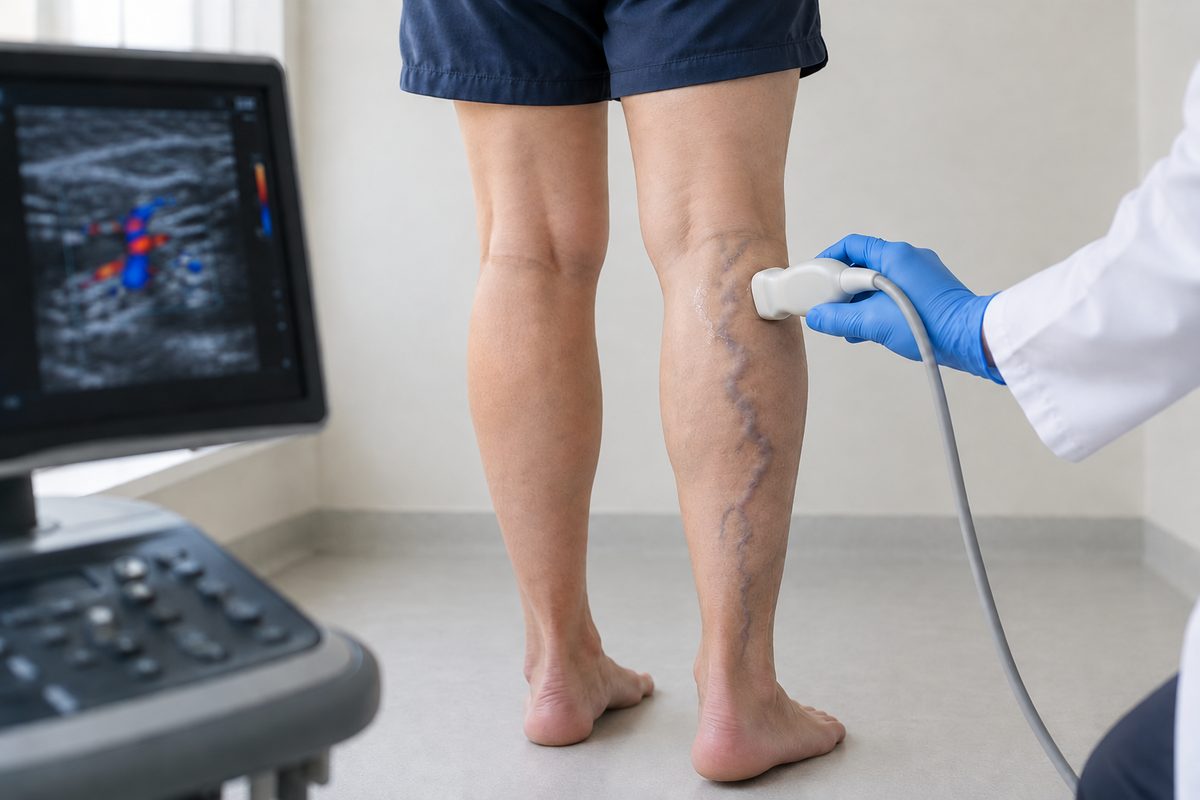
When vein disease lies behind the swelling or the skin changes, a duplex ultrasound scan shows which valves in the leg veins leak.
A leg ulcer or a wound that does not heal is another way in for bacteria, and needs its own care.
Caring for the skin of your legs and feet afterwards
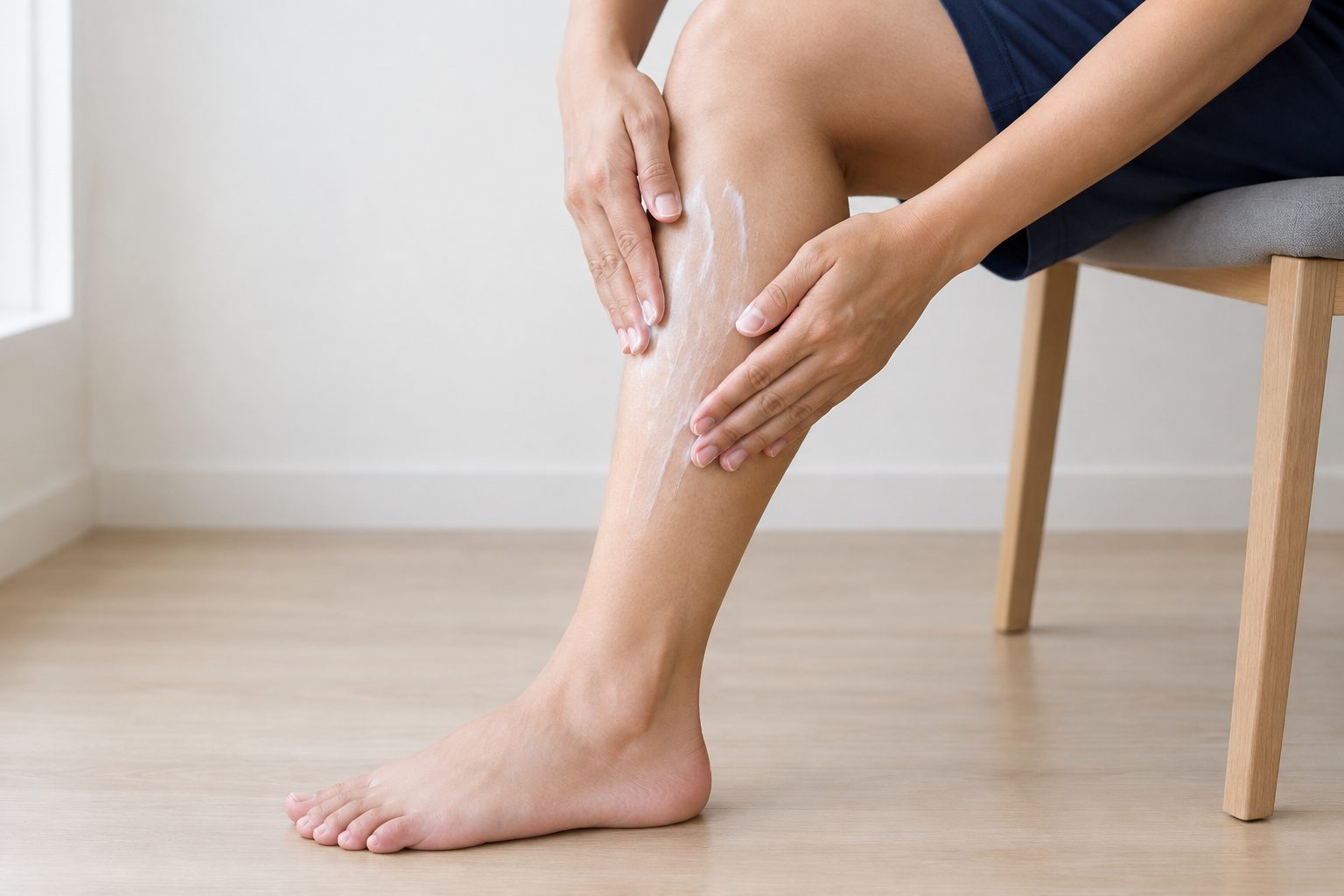
Day to day, these steps protect the skin of the legs and feet:
- keep the skin clean, and moisturise dry skin so it does not crack
- dry well between the toes, and have athlete's foot treated
- clean cuts and scratches, and keep them covered until they heal
- wear shoes or slippers that protect your feet
- with diabetes, check your feet every day for cuts, blisters or redness
If your legs ache, swell or change colour, a scan shows whether the veins are the cause.
Questions patients and families ask
How serious is cellulitis?
It is treated with antibiotics, and it becomes serious if the infection spreads into the blood or the deeper tissues, which needs hospital care.
Will cellulitis go away by itself?
Cellulitis is a bacterial infection that the guideline advises treating with an antibiotic, so a red, hot and swollen leg needs a doctor's check rather than waiting.
How do you get rid of cellulitis?
It is treated with antibiotics from a doctor, usually tablets for 5 to 7 days, and when it keeps coming back, the swelling, wound or skin problem behind it is treated too.
What are the symptoms of cellulitis in the legs?
Usually one leg becomes red, or darker on brown or black skin, and feels warm, swollen and painful.
Blisters can form, and you may feel feverish or unwell.
What is the main reason for cellulitis?
It usually starts when bacteria get in through a break in the skin, and long-term leg swelling, leg ulcers and cellulitis in the past make it more likely.
What does the first stage of cellulitis look like?
It starts as an area of skin that is red, warm, swollen and tender, which can then spread.
On brown or black skin the redness can be harder to see, so warmth, swelling and pain are useful signs too.